Emergency Lighting Testing & Certification in London Starting From £65
Emergency lighting is one of the most important safety systems in any commercial or residential building. When the main power supply fails during a fire or emergency, these lights guide occupants safely to exits. If they do not work properly, escape routes can become dangerous within seconds.

Stay Fully Compliant and Protected
We offer professional installation, maintenance, inspection, and certification of emergency lighting all over London. Our qualified engineers have been working in the field for more than seven years. They help landlords, managing agents and business owners follow UK fire safety laws. We don’t just do basic checks; we make sure that your whole system is up to code and ready for an inspection at any time.

Why Emergency Lighting Compliance Is a Legal Requirement
The Regulatory Reform (Fire Safety) Order 2005 says that all buildings that aren’t homes must have the right kind of emergency lighting certificate London. The “Responsible Person,” who could be the landlord, business owner, or facilities manager, is in charge of this.fi
British Standards such as BS 5266-1 and BS EN 50172 set out how systems must be installed and tested. These standards clearly define:
- How often emergency lighting must be tested
- How long lights must operate during a power failure
- How testing must be recorded
- What level of illumination is required
If the Fire Authority carries out an inspection and records are missing, enforcement action may follow. In serious cases, non-compliance can lead to fines, prosecution or insurance complications.
Geographical Breakdown of London’s Districts
East London
South London
West London
North London
What Emergency Lighting Testing Involves
Proper emergency lighting testing is more detailed than simply turning the power off.
There are two main testing requirements:
Monthly Functional (Flick) Test
This short test confirms that each light activates when the mains power is interrupted. It also checks that fittings are secure, undamaged and begin recharging correctly once power is restored.
Annual Full Duration Test
This is often referred to as a three-hour discharge test. During this process, we simulate a power failure and allow the system to operate for its full rated duration. We monitor brightness levels, battery performance and overall reliability.
In addition to these tests, we inspect:
- Battery condition and charging circuits
- Wiring integrity
- Central battery systems (where installed)
- Escape route illumination
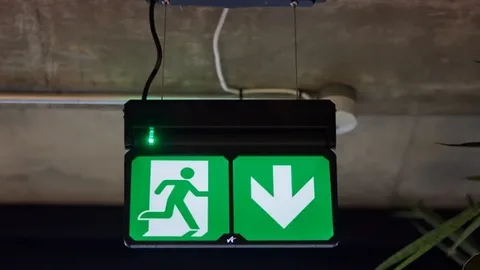
- Fire exit signage visibility
All results are recorded in your logbook, and you receive formal certification once testing is complete.
Emergency Lighting Systems We Install and Maintain
Over the past seven years, we have worked with a wide range of emergency lighting systems across London. These include both modern LED installations and older fittings.
We regularly work with:
- Maintained systems that remain illuminated at all times
- Non-maintained systems that activate only during power failure
- Central battery systems
- Self-contained emergency luminaires
- Escape route and staircase lighting
- Open-area (anti-panic) lighting
- High-risk task area lighting in industrial settings
Each system type requires specific testing procedures, and our engineers are trained to assess them correctly.
Our Process – From Inspection to Certification
We keep the process clear and organised so there are no surprises.
First, we confirm the property details and number of fittings. On the day of inspection, our DBS-checked engineers carry out systematic testing with minimal disruption to your operations. Where required, we can schedule testing outside normal business hours.
Once inspection is complete, you receive:
- A detailed digital report
- Pass or fail status
- Clear explanation of any defects
- Transparent remedial quotation (if required)
- Emergency lighting certificate
If minor faults are found, we can often resolve them on the same visit. Once any corrective works are completed, we retest and issue updated certification.
Our goal is to restore compliance quickly and efficiently.
Installation, Upgrades and Ongoing Maintenance
In addition to testing and certification, we provide complete emergency lighting installation and upgrade services across London.
This includes:
- New system installations
- LED emergency lighting upgrades
- Battery replacement
- Additional fittings to meet illumination standards
- Integration with fire alarm systems
- Planned maintenance contracts
All installation work follows BS 5266 guidelines to ensure long-term safety and compliance.
Get Your Emergency Lighting Certificate in London Today
Contact Liviosiv today for professional Emergency Lighting Testing and Certification across London.
Who We Work With
Commercial offices
Retail premises
Warehouses and logistics sites
Care homes and healthcare facilities
DBS-checked engineers
Schools and educational settings
HMOs and residential blocks
Managing agents with multi-property portfolios
Why Clients Across London Choose Us
With over seven years of experience in electrical and fire safety compliance, we understand both the technical and legal requirements of emergency lighting systems.
Clients choose us because we provide:
- Fully qualified and insured engineers
- DBS-checked professionals
- Clear reporting and fast certification
- Minimal disruption to business operations
- Transparent pricing
- Complete installation, maintenance and inspection service
We take compliance seriously and treat every property with professional care.
Frequently Asked Questions (FAQ)
What is an Emergency Lighting Certificate?
Your emergency lighting system has been tested and is working properly according to UK safety standards. This is what an Emergency Lighting Certificate shows. It shows that your system will still work even if the power goes out.
Is emergency lighting legally required in the UK?
Yes. In many types of buildings, such as HMOs, commercial buildings, and shared residential areas, emergency lighting is required by law. It is part of the UK law’s fire safety rules.
Who is responsible for emergency lighting testing?
The landlord, business owner, or managing agent is legally responsible for making sure that emergency lighting is put in, tested, and kept up.
How often should emergency lighting be tested?
Emergency lighting should be: Visually checked weekly, Functionally tested monthly, Fully duration-tested annually
You should write down and keep all the test results.
Is emergency lighting testing mandatory for HMOs?
Yes. HMOs and buildings with shared escape routes must test their emergency lighting. Regular testing and certification help keep tenants safe and make sure they follow the rules.
How long does an emergency lighting inspection take?
Most checks of emergency lighting take one to two hours, depending on how big the building is and how many lights it has.
Will I receive a certificate after the inspection?
Yes. You will get a digital Emergency Lighting Certificate and a clear inspection report if your system meets the necessary standards.
What happens if my emergency lighting fails the test?
If we find any problems, we will clearly explain what they are and suggest the repairs or upgrades that need to be made in order to bring the system back into compliance before certification can be given.
Do emergency lighting certificates expire?
At the time of testing, emergency lighting certificates show how the system is working. To stay in compliance, you need to test regularly, especially the full-duration test every year.
Can emergency lighting testing be done alongside a Fire Risk Assessment?
Yes. A Fire Risk Assessment and emergency lighting testing are often done at the same time to help property owners better handle their fire safety duties.
Accrediations



 contact@liviosiv.co