
Commercial EICR London for Safe, Compliant and Reliable Business Premises
Liviosiv provides professional Commercial EICR London services for businesses, commercial landlords, managing agents, facilities managers and property managers across London and the M25. A Commercial Electrical Installation Condition Report checks the condition of the fixed electrical installation within your business premises. It can identify damaged wiring, electrical defects, deterioration, poor protective measures and other issues that may affect electrical safety.

Our EICR testing in London can cover distribution boards, fixed wiring, circuits, sockets, switches, protective devices, earthing, bonding and other parts of the electrical installation included within the agreed inspection scope. Following the inspection and testing, you receive a clear EICR report showing the condition of the installation, electrical test results and any observations that require attention. If the report is Unsatisfactory, Liviosiv can also provide a quotation for the required EICR remedial works.
Need a Commercial EICR for your business?
Send us your property details, distribution-board information or previous EICR for a quotation.
Who We Provide EICR Testing For
Landlords
Homeowners
Letting Agents
Estate Agents
Property Managers
Businesses
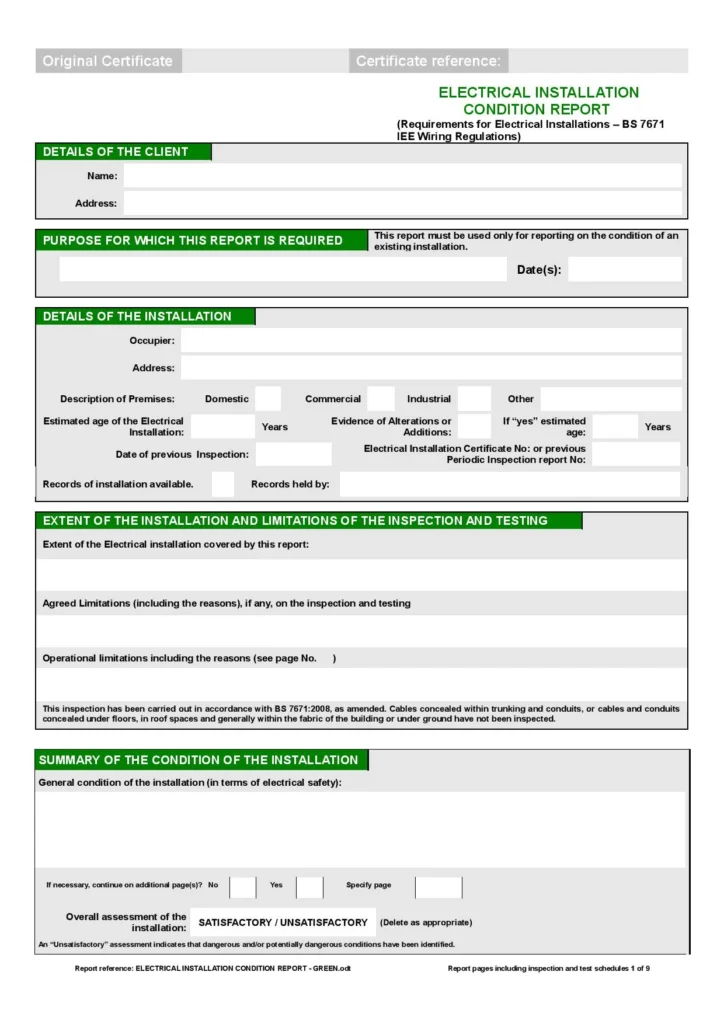
Commercial EICR Testing for Businesses and Commercial Properties
Electrical installations in commercial buildings can change over time. New equipment may be installed, circuits may be altered and parts of the installation may deteriorate through age, heavy use or environmental conditions. A professional EICR inspection helps establish the condition of the fixed electrical system and identify issues that may not be visible during normal use.
What Is an EICR?
EICR stands for Electrical Installation Condition Report. An EICR is a formal inspection and test of an existing fixed electrical installation. For commercial premises, the inspection may cover:
- Distribution boards
- Fixed wiring
- Electrical circuits
- Protective devices
- Earthing arrangements
- Bonding
- Fixed sockets and switches
- Lighting circuits
- Other fixed electrical systems within the agreed scope
The completed report records the condition of the installation at the time of the inspection.
What Is an EICR Certificate?
People often search for an EICR certificate, electrical safety certificate or electrical safety certificate in London when they need evidence that a fixed electrical installation has been inspected.
Technically, the formal document is an Electrical Installation Condition Report rather than a simple pass certificate.
The EICR records:
- What was inspected
- The extent of the inspection
- Any limitations
- Electrical test results
- Defects and observations
- Classification codes
- Overall assessment
- Recommended date for the next inspection
For commercial property, this report can form an important part of the building’s electrical safety and maintenance records.
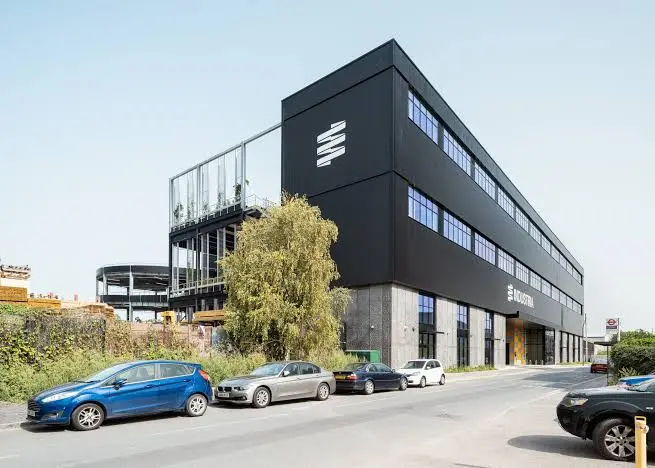
Need an EICR in London? Explore the Areas We Cover
Why Commercial EICR Testing Matters
An electrical system can appear to work normally even when defects are developing. A Commercial EICR can help identify problems before they become more serious.
Potential findings can include damaged wiring, deteriorated insulation, loose electrical connections, signs of overheating, defective protective devices, earthing problems, inadequate bonding, unsafe electrical alterations, and circuits requiring further investigation.
Finding these issues allows the responsible person to plan suitable repairs and maintenance before electrical problems become more serious.
Who Needs a Commercial Electrical Installation Condition Report?
A commercial electrical installation condition report may be arranged by commercial landlords, business owners, employers, commercial tenants, facilities managers, property managers, managing agents, freeholders, building managers, developers, and organisations responsible for multiple sites. Responsibility can depend on the electrical installation, building arrangement and terms of the commercial lease.
EICR for Commercial Landlords
A commercial landlord may be responsible for electrical systems serving common areas, landlord distribution boards, shared services, plant rooms, external lighting, and other landlord-controlled areas.
The lease should be reviewed where responsibility is unclear.
EICR for Commercial Tenants
A business tenant may be responsible for electrical systems serving the unit or area they occupy. The exact responsibility depends on the lease and how the electrical installation is divided.
EICR for Managing Agents and Facilities Managers
Managing agents and facilities teams often arrange EICR testing on behalf of landlords, freeholders or businesses. Liviosiv can also support planned inspection programmes covering several commercial properties.
What Does a Commercial EICR Inspection Cover?
A Commercial EICR focuses on the fixed electrical installation included within the agreed inspection scope. The exact checks depend on the type, size and complexity of the premises.
Distribution Boards, Consumer Units and Switchgear
Relevant distribution equipment may be checked for general condition, signs of damage, evidence of overheating, circuit identification, protective devices, main switches, accessible connections, and previous alterations.
Larger commercial buildings may contain several distribution boards or sub-distribution boards, so the inspection scope should clearly identify which boards are included.
Fixed Wiring and Electrical Circuits
The condition of fixed wiring and electrical circuits is assessed through inspection and electrical testing. This helps identify deterioration, damage and faults that may not be obvious from a visual check alone.
Sockets, Switches and Fixed Accessories
Accessible electrical accessories may be checked for damage, loose fittings, signs of overheating, deterioration, unsafe alterations, and general condition.
Earthing and Protective Bonding
Earthing and protective bonding form an important part of protection against electric shock. Relevant arrangements are assessed as part of the Commercial EICR inspection.
RCD, RCBO and Circuit Protection
Where relevant to the installation, checks may include RCD protection, RCBO protection, circuit breakers, fuses, protective-device suitability, and operation of protective devices.
Lighting Circuits and Fixed Equipment
Fixed lighting circuits can form part of the Commercial EICR. Permanently connected electrical equipment may also be considered where it forms part of the agreed inspection scope.
What EICR Tests Are Carried Out?
An EICR combines visual inspection with electrical testing. The exact EICR tests depend on the installation and what can be safely accessed and isolated.
Visual Electrical Inspection
The engineer checks accessible parts of the electrical system for visible signs of: Damage, Deterioration, Overheating, Loose components, Poor installation, Unsafe modifications, Inadequate protectionContinuity Testing
Continuity testing can help verify relevant protective conductors and electrical paths.Insulation Resistance Testing
Insulation resistance testing helps assess the condition of insulation between electrical conductors. Poor results may indicate damaged or deteriorating wiring.Polarity Testing
Polarity checks help confirm that conductors and protective devices are connected correctly.
Earth Fault Loop Impedance Testing
Earth fault loop impedance testing can help assess whether fault-protection arrangements are suitable.RCD Testing
Where RCDs are installed and included within the inspection, suitable operation and trip testing may be carried out.Recording EICR Test Results
The electrical test results are recorded within the EICR report. Any agreed limitations should also be recorded.Defining the Scope of Your Commercial EICR
A Commercial EICR should clearly identify which parts of the electrical installation are being assessed. This is particularly important in larger, leased or mixed-use properties where different electrical systems may be controlled by different people.
Which Distribution Boards and Circuits Are Included?
The inspection may cover one or several distribution boards. The number of boards and circuits can affect inspection time, testing time, report complexity, and the overall EICR cost.
Landlord and Tenant Electrical Systems
Some commercial buildings contain separate landlord supplies, tenant supplies, communal circuits, plant supplies, and external electrical systems. These should be identified before the inspection begins so the EICR scope is clear.
Shared Commercial Buildings
A shop, office or other commercial unit may occupy only part of a wider electrical installation. The physical boundary of the premises does not always match the boundary of the electrical system, especially in multi-tenanted or mixed-use buildings.
Inspection Limitations
Inspection limitations may need to be recorded where electrical areas cannot be accessed, rooms are locked, circuits cannot be isolated, critical equipment cannot be switched off, parts of the installation are concealed, or an area falls outside the agreed scope.
Clear limitations help explain exactly what the Commercial EICR inspection covered and make the final report easier to understand.
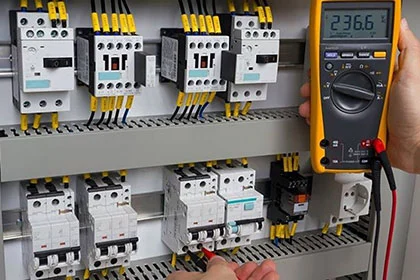
Our Commercial EICR Testing Process
Liviosiv follows a simple process from booking to reporting and remedial work.
Property Review – We confirm the property type, distribution boards, circuit count, access details, and operating hours.
Previous EICR – If available, send your previous report so we can review the installation and any earlier observations.
Testing Plan – We identify any critical equipment or circuits that may require careful planning before temporary isolation.
Inspection and Testing – The engineer checks the fixed electrical installation and carries out relevant electrical tests where safe and practical.
EICR Report – The report records the test results, observations, classification codes, limitations, and overall assessment.
Remedial Works – If the EICR is Unsatisfactory, Liviosiv can provide a quotation for suitable EICR remedial works.
Will Commercial EICR Testing Disrupt My Business?
Some electrical tests may require temporary circuit isolation, but good planning can help reduce disruption.
During Business Hours – Testing may be possible while the business remains open, depending on the property type, access, electrical system, and circuits that need isolation.
Offices and IT Systems – Let us know if circuits serve servers, computers, network equipment, telecommunications, or security systems so isolation can be planned carefully.
Restaurants and Commercial Kitchens – Testing may need to be planned around refrigeration, cooking equipment, extraction systems, and other kitchen equipment.
Warehouses and Industrial Premises – Sites with machinery, three-phase systems, high-load circuits, or large distribution systems may require additional planning before testing begins.
Commercial EICR Classification Codes Explained
When an electrical issue is identified, the EICR may assign a classification code.
EICR Code | Meaning | Action |
C1 | Danger present | Immediate action required |
C2 | Potentially dangerous | Remedial action required |
C3 | Improvement recommended | Improvement should be considered |
FI | Further investigation required | Further investigation required without delay |
What Happens If Your Commercial EICR Is Unsatisfactory?
An Unsatisfactory EICR does not automatically mean the whole electrical installation needs replacing. The individual findings need to be reviewed.Review the EICR Findings: Each observation should be considered based on:- Classification code
- Circuit affected
- Defect identified
- Level of risk
- Further investigation required
- Repairing defective electrical circuits
- Replacing damaged sockets and switches
- Replacing unsuitable protective devices
- RCD or RCBO remedial work
- Earthing improvements
- Bonding improvements
- Distribution board repairs
- Distribution board upgrades
- Electrical fault finding
- Repairing damaged wiring
- Correcting unsafe electrical alterations
- Other defects identified within the EICR
Commercial EICR Legal Duties and Electrical Safety
Commercial electrical safety should be treated as an ongoing responsibility rather than simply a certificate-renewal exercise.
Electricity at Work Regulations 1989
UK workplace electrical safety requirements place duties on those responsible for electrical systems to keep them maintained so they do not give rise to danger. Inspection and testing can form an important part of maintaining the installation safely.
BS 7671 Wiring Regulations
Commercial EICR inspection and testing is carried out with reference to the relevant requirements of BS 7671, commonly known as the IET Wiring Regulations. The EICR assesses the condition of an existing electrical installation.
Is a Commercial EICR a Legal Requirement?
There is no single rule stating that every type of commercial property must obtain an EICR at exactly the same fixed interval. However, those responsible for workplace electrical systems have duties to manage electrical safety. A Commercial EICR provides a recognised way to inspect, test and document the condition of a fixed electrical installation.
Further requirements may also arise from:
- Commercial leases
- Insurance conditions
- Health and safety arrangements
- Property management requirements
- Contractual obligations
- Previous EICR recommendations
How Often Should a Commercial Property Have an EICR?
One common question is how long does an EICR last? The correct interval depends on the condition of the installation, how the property is used and the level of electrical risk. The previous EICR should normally state the recommended date for the next inspection.
Age and Condition – Older or deteriorated electrical systems may require closer monitoring and more frequent inspection.
Type and Use of the Property – A standard office may place different demands on its electrical installation than a factory, restaurant, workshop, warehouse, or commercial kitchen.
High Electrical Loads – Machinery, commercial equipment, and intensive electrical use can affect how often the installation should be inspected.
Environmental Conditions – Conditions such as moisture, dust, heat, corrosive environments, and mechanical damage can increase wear on electrical installations.
Changes to the Property – A new tenant, refurbishment, extension, or major change of use may also be a sensible time to review the electrical installation.
Three-Phase Commercial EICR Testing
Many larger commercial properties contain three-phase electrical installations. Liviosiv can provide commercial electrical inspection and testing for suitable three-phase systems, subject to the agreed scope.
Three-Phase Distribution Boards – Three-phase supplies are commonly found in warehouses, restaurants, workshops, industrial units, large offices, commercial kitchens, retail premises, and manufacturing sites.
High-Load Electrical Equipment – Three-phase systems may supply motors, plant, machinery, commercial kitchen equipment, HVAC systems, and production equipment.
Multiple Distribution Boards – Larger properties may contain main distribution boards, sub-distribution boards, three-phase boards, and local electrical boards. The number of boards and circuits should be considered when preparing the quotation.
Commercial EICR Cost in London
The Commercial EICR cost depends mainly on the size and complexity of the electrical installation. A small commercial unit with one distribution board will normally require less testing than a large warehouse, restaurant or office building containing several boards.
What Affects the Cost – The EICR certificate cost for commercial property can depend on the number of electrical circuits, number of distribution boards, three-phase supplies, property size, number of floors, access requirements, installation complexity, and operational restrictions.
EICR Cost London – Commercial EICR pricing should be based on the electrical installation being inspected rather than only the number of rooms within the property. For an accurate EICR cost London quotation, send Liviosiv your electrical installation details.
Getting an Accurate Quote – Please provide the full property address, postcode, type of commercial premises, number of distribution boards, approximate circuit count, previous EICR if available, distribution-board photographs, and access requirements. If you do not know the circuit count, your previous report or clear photographs can help us assess the likely scope.
Commercial Sectors We Cover
Liviosiv provides Commercial EICR testing in London across a wide range of commercial and non-domestic properties.
Offices and Corporate Buildings – We provide electrical inspection and testing for small offices, corporate offices, office blocks, serviced offices, co-working spaces, business centres, and multi-tenanted office buildings.
Shops and Retail Premises – Our commercial electrical services cover high-street shops, retail units, shopping-centre units, supermarkets, convenience stores, showrooms, department stores, and retail chains.
Restaurants and Commercial Kitchens – We provide Commercial EICR testing for restaurants, cafés, takeaways, commercial kitchens, bakeries, food preparation premises, and catering businesses.
Pubs, Bars and Licensed Premises – Electrical inspection can be arranged for pubs, bars, clubs, licensed venues, and entertainment premises.
Hotels and Hospitality – Our services can support hotels, guest accommodation, hostels, serviced accommodation, hospitality venues, and event venues.
Warehouses and Storage Facilities – We work with warehouses, storage units, distribution centres, logistics premises, fulfilment centres, and commercial storage buildings.
Industrial and Manufacturing Premises – Commercial EICRs can be arranged for industrial units, factories, workshops, manufacturing sites, engineering premises, and production facilities.
Schools and Education – We provide commercial electrical testing for schools, colleges, universities, nurseries, training centres, and educational campuses.
Healthcare and Medical Premises – Our commercial electrical inspection services can support clinics, GP surgeries, dental practices, medical centres, private healthcare facilities, and managed healthcare buildings.
Care Homes and Supported Facilities – EICR testing can be arranged for care homes, nursing homes, supported-living premises, and residential care facilities.
Gyms, Fitness and Leisure – We cover gyms, fitness centres, leisure centres, sports facilities, health clubs, and exercise studios.
Hair, Beauty and Personal Care – Commercial EICRs can be arranged for hair salons, beauty salons, barbers, nail salons, treatment rooms, and spa premises.
Places of Worship and Community Buildings – We can also support churches, mosques, temples, community centres, community halls, and charitable premises.
Commercial Landlord Properties – Liviosiv works with commercial landlords responsible for individual commercial units, mixed-use properties, multi-tenanted buildings, commercial portfolios, landlord common areas, and managed buildings.
Mixed-Use Properties – Mixed-use buildings may contain both commercial and residential areas, with separate landlord supplies, tenant supplies, and communal electrical systems. The inspection scope should clearly identify which systems form part of the Commercial EICR.
Public and Managed Buildings – Commercial electrical inspection can also support public buildings, community facilities, managed estates, facilities-managed premises, and organisational buildings.
Multi-Site Commercial Portfolios – Liviosiv can help organise Commercial EICR testing across multiple London locations for property management companies, facilities management companies, commercial landlords, retail groups, restaurant groups, office portfolios, and managing agents.
Commercial EICR vs PAT Testing and Other Safety Inspections
Several inspections may apply to the same commercial building, but they do different jobs.
Service | Main Purpose |
Commercial EICR | Condition of the fixed electrical installation |
PAT Testing | Electrical appliances and portable equipment |
Emergency Lighting Testing | Emergency escape lighting |
Fire Alarm Testing | Fire detection and alarm system |
Electrical Fault Finding | Investigation of a specific electrical problem |
Common Problems Found During Commercial EICR Testing
Every commercial installation is different, but certain types of problems are regularly identified.
- Damaged or Deteriorated Wiring
- Loose Electrical Connections
- Overloaded Circuits
- Inadequate Earthing or Bonding
- Defective Protective Devices
- Signs of Overheating
- Poor Circuit Identification
- Unsafe Electrical Alterations
- Ageing Distribution Equipment
Why Choose Liviosiv for Commercial EICR Testing in London?
Choosing an experienced commercial electrical inspection provider is important when dealing with larger or more complex electrical systems.Liviosiv provides a structured service from inspection and testing through to remedial support where required.- Accredited and Qualified Electrical Professionals
- Commercial Electrical Experience
- Clear EICR Reports
- EICR Remedial Works Available
- Practical Planning Around Your Business
- Transparent Inspection Scope
- London and M25 Coverage
Commercial EICR Testing Across London
If you are searching for an EICR certificate near me, electrical installation condition report near me, EICR London or EICR testing London, Liviosiv provides commercial electrical inspection across the capital.
Liviosiv provides professional EICR testing for commercial properties across London, covering every area from Central London to the wider M25. Our electricians support landlords, homeowners, letting agents, property managers and businesses with electrical inspection and testing throughout the following locations.
Central London including Westminster (SW1), the City of London (EC1–EC4), Holborn and Bloomsbury (WC1), Covent Garden (WC2), Soho, Mayfair, Marylebone and Fitzrovia (W1), St James’s, Pimlico, Victoria and Belgravia (SW1), South Bank (SE1), Knightsbridge (SW1/SW7), Chelsea (SW3/SW10), Kensington (W8/W14), Paddington and Bayswater (W2), and Notting Hill (W11).
North London covering Barnet, Enfield, Haringey, Camden and Islington, including Highgate (N6), Muswell Hill (N10), Crouch End (N8), Finsbury Park (N4), Archway (N19), Hampstead (NW3), Golders Green (NW11), East, West and North Finchley (N3/N12/N2), Mill Hill (NW7), Totteridge and Whetstone (N20), Barnet (EN5), Enfield Town (EN2), Palmers Green (N13), Winchmore Hill (N21), Southgate (N14), Edmonton (N9/N18), Bounds Green (N11), Wood Green and Alexandra Palace (N22), Holloway (N7) and Islington (N1).
North West London covering Brent, Harrow, Camden and parts of Barnet and Ealing, including Cricklewood (NW2), Kilburn (NW6), Willesden, Neasden and Harlesden (NW10), Wembley (HA9), Alperton (HA0), Kingsbury and Colindale (NW9), Queensbury (HA8), Kenton (HA3), Harrow including Harrow on the Hill, South Harrow, North Harrow and Harrow Weald (HA1–HA3), Pinner (HA5), Ruislip (HA4), Stanmore (HA7), Edgware (HA8), Hendon and Brent Cross (NW4), and Swiss Cottage (NW3).
West London covering Hammersmith & Fulham, Ealing, Hounslow and Hillingdon, including Acton (W3), Chiswick (W4), Ealing and West Ealing (W5/W13), Northfields (W13), Hanwell (W7), Hammersmith (W6), Shepherd’s Bush and White City (W12), Holland Park (W11), Southall (UB1/UB2), Brentford (TW8), Isleworth (TW7), Hounslow and Osterley (TW3/TW7), Feltham (TW13), Hayes and Harlington (UB3/UB4), Uxbridge (UB8/UB10), Yiewsley and West Drayton (UB7).
South West London covering Wandsworth, Richmond, Kingston and Merton, including Putney (SW15), Wandsworth, Earlsfield and Southfields (SW18), Clapham Junction and Battersea (SW11), Balham (SW12), Tooting (SW17), Wimbledon and Colliers Wood (SW19), Raynes Park (SW20), Morden (SM4), Mitcham (CR4), Streatham and Norbury (SW16), Richmond (TW9/TW10), Twickenham (TW1/TW2), Teddington (TW11), Hampton (TW12), Kingston upon Thames (KT1/KT2), Surbiton (KT5/KT6) and New Malden (KT3).
South London covering Lambeth, Southwark and Croydon, including Brixton (SW2/SW9), Clapham (SW4), Stockwell (SW9), Vauxhall (SW8), Kennington (SE11), Elephant & Castle (SE1/SE17), Camberwell (SE5), Peckham (SE15), Dulwich and Herne Hill (SE21/SE22/SE24), Crystal Palace (SE19/SE20), Norwood including West, Upper and South Norwood (SE19/SE25/SE27), Thornton Heath (CR7), Croydon including Central, South, East, Purley and Coulsdon (CR0), Addiscombe, Shirley and Selhurst (CR0/SE25).
South East London covering Lewisham, Greenwich, Bexley and Bromley, including Deptford (SE8), New Cross (SE14), Brockley (SE4), Lewisham and Hither Green (SE13), Catford (SE6), Blackheath (SE3), Greenwich (SE10), Eltham (SE9), Woolwich and Plumstead (SE18), Abbey Wood (SE2), Thamesmead (SE28), Bexleyheath (DA6/DA7), Welling (DA16), Sidcup (DA14/DA15), Chislehurst (BR7), Bromley (BR1/BR2), Beckenham (BR3), Orpington (BR5/BR6), and Penge, Anerley and Grove Park (SE20/SE12).
East London covering Hackney, Tower Hamlets, Newham, Barking & Dagenham, Redbridge, Havering and Waltham Forest, including Shoreditch and Hoxton (EC2/N1), Bethnal Green and Whitechapel (E2/E1), Stepney (E1), Poplar and Canary Wharf (E14), Bow (E3), Stratford (E15/E20), Forest Gate (E7), Plaistow (E13), East Ham (E6), West Ham and Canning Town (E15/E16), Beckton (E6), Barking (IG11), Dagenham and Chadwell Heath (RM6/RM8–RM10), Ilford, Seven Kings and Goodmayes (IG1–IG3), Romford and Gidea Park (RM1–RM7), Hornchurch (RM11/RM12), Upminster (RM14), Wanstead (E11), Leyton and Leytonstone (E10/E11), Walthamstow (E17), Chingford (E4), and Woodford Green (IG8).
Surrounding Towns Just Outside the M25 extending to Watford (WD17–WD25), Bushey (WD23), Borehamwood and Elstree (WD6), Potters Bar (EN6), Cheshunt and Waltham Abbey (EN7–EN9), Epping, Loughton and Theydon Bois (CM16/IG10), Chigwell and Buckhurst Hill (IG7/IG9), Brentwood (CM13–CM15), Dartford and Swanley (DA1/DA2/BR8), Epsom and Ewell (KT17–KT19), Leatherhead (KT22), Ashford Middlesex (TW15), Staines-upon-Thames (TW18/TW19), Sunbury and Shepperton (TW16/TW17), and Rickmansworth and Chorleywood (WD3).
Need an EICR in your area? Call Liviosiv first to check availability, email our team for assistance, request a quote, or book your EICR certificate.
Request a Commercial EICR Quote in London
Whether you manage a shop, restaurant, office, warehouse, industrial unit or a portfolio of commercial properties, Liviosiv can help you arrange professional inspection and testing of the fixed electrical installation.
Commercial EICR Frequently Asked Questions
What Is a Commercial EICR?
A Commercial EICR is an Electrical Installation Condition Report for a business or other non-domestic property. It assesses the condition of the fixed electrical installation through inspection and testing. The final report records the findings, electrical test results, any limitations and whether the installation is considered Satisfactory or Unsatisfactory.
What Is Included in a Commercial EICR Report?
A Commercial EICR report records the condition of the electrical installation at the time of inspection. It includes the inspection scope, electrical test results, any agreed limitations, defects identified, EICR classification codes and the overall result. The report will also normally show the recommended date for the next periodic inspection.
Is a Commercial EICR the Same as a Commercial Electrical Safety Certificate?
The terms Commercial EICR certificate and commercial electrical safety certificate are commonly used by customers, but the formal document is an Electrical Installation Condition Report. The report provides a detailed record of the condition of the fixed electrical installation rather than simply acting as a pass certificate.
Is a Commercial EICR a Legal Requirement?
Those responsible for workplace electrical systems have duties to maintain electrical installations so they do not give rise to danger. There is not one universal statutory rule requiring every commercial property to have an EICR at exactly the same interval. However, periodic inspection and testing is widely used to assess and document the condition of commercial electrical installations, and an EICR may also be required by a lease, insurer, property manager or other contractual arrangement.
How Often Should a Commercial EICR Be Carried Out?
The recommended inspection interval depends on the type of commercial premises, the condition of the electrical installation and the level of risk. Many lower-risk commercial properties such as offices and shops are commonly inspected at intervals of up to five years, while higher-risk premises may require more frequent inspection. The recommended next inspection date shown on the existing EICR should also be considered.
How Long Is a Commercial EICR Valid For?
There is no single validity period that applies to every commercial property. The appropriate interval depends on factors such as the type of business, installation condition, environmental conditions and how heavily the electrical system is used. The Commercial EICR should normally state a recommended date for the next inspection.
How Much Does a Commercial EICR Cost in London?
The cost of a Commercial EICR in London depends mainly on the size and complexity of the electrical installation. Factors such as the number of circuits, number of distribution boards, three-phase systems, property size, access and operating restrictions can all affect the price. Liviosiv can provide a more accurate quotation when you send the previous EICR or details of the electrical installation.
What Does a Commercial EICR Check?
A Commercial EICR can assess the condition of fixed wiring, electrical circuits, distribution boards, sockets, switches, fixed lighting circuits, protective devices, earthing, bonding, RCD protection and other fixed electrical components included within the agreed scope. The purpose is to identify deterioration, defects and unsafe conditions that may require further action.
What Makes a Commercial EICR Unsatisfactory?
A Commercial EICR will normally be assessed as Unsatisfactory if it contains C1, C2 or FI observations. These findings indicate that immediate action, remedial work or further investigation is required. C3 observations alone do not normally make the report Unsatisfactory.
What Does a Commercial EICR Check?
A Commercial EICR will normally be assessed as Unsatisfactory if it contains C1, C2 or FI observations. These findings indicate that immediate action, remedial work or further investigation is required. C3 observations alone do not normally make the report Unsatisfactory.
Does Liviosiv Carry Out Commercial EICR Remedial Works?
Yes. Liviosiv can provide Commercial EICR remedial works following an Unsatisfactory report where the required repairs fall within our service scope. This may include circuit repairs, replacement of damaged accessories, RCD or RCBO work, earthing and bonding improvements, distribution board work, wiring repairs and electrical fault finding.
Will I Receive Certification After Commercial EICR Remedial Work?
Where applicable, appropriate electrical documentation can be provided after remedial work has been completed. Depending on the type of work, this may include an Electrical Installation Certificate, a Minor Electrical Installation Works Certificate or other relevant records.
Is PAT Testing Included in a Commercial EICR?
No. A Commercial EICR focuses on the fixed electrical installation, while PAT testing relates to portable and plug-connected electrical appliances. Businesses may require both services, but they are separate inspections.
Do You Carry Out Commercial EICRs on Three-Phase Installations?
Yes. Liviosiv can support commercial landlords, facilities managers, managing agents and property managers who need EICR testing across several commercial properties. If you manage a portfolio, you can send us the address list and available electrical information so the inspection programme can be reviewed.
Can I Send My Existing Commercial EICR for a Quote?
Yes. A previous Commercial EICR is very useful because it can show the number of distribution boards, circuit count, previous observations and the general layout of the electrical installation. This can help Liviosiv understand the likely inspection scope before preparing a quotation.
What Types of Commercial Properties Does Liviosiv Inspect?
Liviosiv provides Commercial EICR testing for offices, shops, retail units, restaurants, cafés, hotels, warehouses, industrial units, factories, workshops, schools, healthcare premises, care facilities, gyms, salons, entertainment venues, mixed-use buildings and other commercial properties across London.
Accreditations

 contact@liviosiv.co