Professional Fire Extinguisher Servicing and Maintenance in London
Fire extinguishers are important safety equipment in offices, shops, restaurants, residential buildings and other workplaces. However, they need regular checks and maintenance to remain safe and ready for use. At Liviosiv, we provide professional fire extinguisher servicing in London, helping landlords, businesses, managing agents and property owners look after their fire safety equipment. Our fire extinguisher services include annual maintenance, safety inspections, equipment checks, replacement advice and relevant servicing documentation.
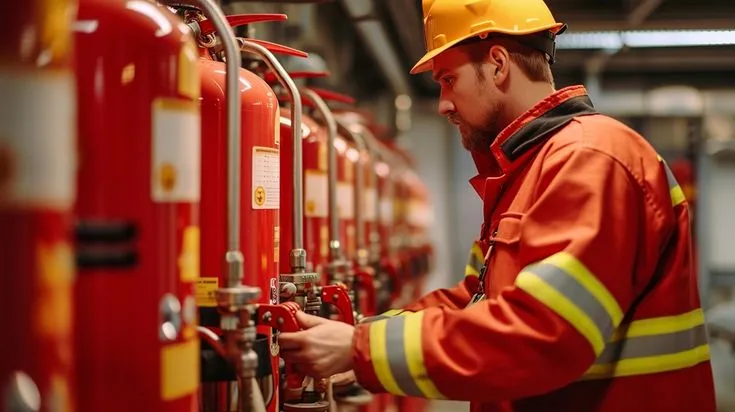
Whether you have a single CO2 fire extinguisher in an office or several water, foam and powder extinguishers across a commercial property, we can help you assess your servicing requirements.
Fire Extinguisher Servicing Cost
1-3 Fire Extinguisher
£85
3-6 Fire Extinguisher
£95
6-10 Fire Extinguisher
£135
10-15 Fire Extinguisher
£170
Fire Safety Services
Fire Safety Certificate
Fire Door Certificate
Fire Door Installers
Door Replacement
Fire Risk Assessment
Fire Door Survey
Door Repair
Who We Provide Fire Extinguisher Servicing For
Landlords
Homeowners
Letting Agents
Estate Agents
Property Managers
Businesses

Reliable Fire Extinguisher Service for Residential and Commercial Properties
Every property has different fire risks. For example, an office may have electrical equipment, while a restaurant may have cooking oil hazards. The right extinguishers must be selected for these risks and maintained correctly.
Our fire extinguisher service supports:
- Offices and commercial buildings
- Shops and retail premises
- Restaurants and commercial kitchens
- Hotels and hospitality properties
- HMOs and residential communal areas
- Warehouses and industrial units
- Schools and healthcare buildings
- Managing agents and property portfolios
We help clients arrange regular fire extinguisher maintenance and identify equipment that may need further attention.
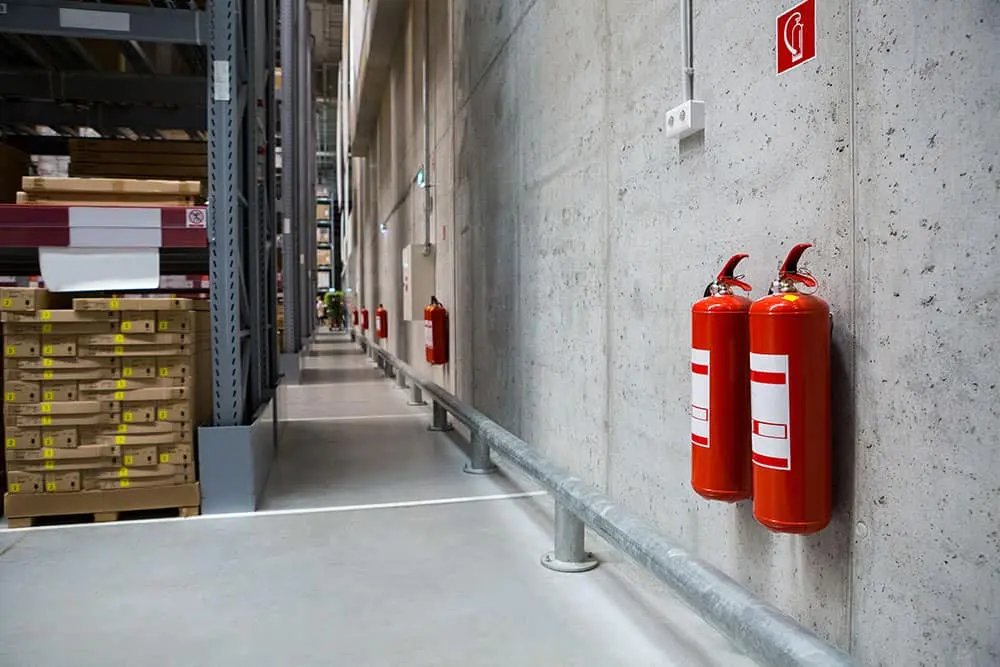
Annual Fire Extinguisher Inspection, Testing and Maintenance
A professional fire extinguisher inspection helps identify faults that may affect the equipment’s condition or performance. During a routine service, relevant checks may include:
- Cylinder condition and corrosion
- Pressure gauge readings
- Extinguisher weight where applicable
- Safety pins and tamper seals
- Hoses and discharge nozzles
- Operating mechanisms
- Fire extinguisher labels
- Correct positioning and accessibility
- Maintenance history and service records
Fire extinguisher testing procedures depend on the type of equipment and the service required. A standard annual service does not normally involve discharging every extinguisher.
Fire Extinguisher Services That Support UK Fire Safety Compliance
Our services support customers who need to manage fire-fighting equipment in line with relevant fire safety requirements. Portable extinguishers should normally receive annual basic servicing under BS 5306-3. Routine visual checks should also be carried out between professional visits.
Our Fire Extinguisher Services in London
Liviosiv supports customers with different fire extinguisher maintenance needs, from routine annual servicing to the assessment of damaged or unsuitable equipment.
Annual Fire Extinguisher Servicing
Annual fire extinguisher servicing helps establish whether equipment remains suitable for continued use. The technician examines relevant components, checks for visible defects and records any further maintenance required.Fire Extinguisher Inspection and Safety Checks
Regular fire extinguisher inspections help identify issues such as missing or damaged equipment, pressure loss, leaking cylinders, broken seals, damaged hoses, unreadable instructions, blocked access and incorrect extinguisher locations. Any faults identified should be assessed and addressed without unnecessary delay.Fire Extinguisher Testing and Maintenance
Professional fire extinguisher testing involves the checks required for the equipment and service type. These may include pressure-related checks, weight measurements and the examination of operating components. More detailed procedures may be required during extended servicing or overhaul.Fire Extinguisher Supply, Installation and Replacement
An extinguisher may need replacing if it is damaged, unsuitable or no longer safe to maintain. We can discuss supply, positioning, commissioning and replacement requirements as part of your fire safety arrangements.Fire Extinguisher Certification and Service Documentation
Following a completed service, relevant maintenance information is recorded, including equipment identification, service date, work carried out, technician details, identified defects, recommended corrective actions and the next servicing date. These records can support fire safety audits, maintenance planning and insurance discussions. A servicing record confirms the work completed but does not certify the entire building as compliant.Fire Extinguisher Service Cost in London
The fire extinguisher service cost depends on the number of extinguishers, their types and the work needed. For example, servicing several extinguishers at one property may involve different arrangements from visiting multiple buildings individually.
What Affects Fire Extinguisher Servicing Prices?
Several factors can affect the total quotation:
- Number of extinguishers
- Type of equipment
- Condition and age
- Basic or extended servicing requirements
- Location and building access
- Replacement parts
- Specialist maintenance
- Additional visits
Types of Fire Extinguishers We Service
Different fire extinguishers are designed to tackle different types of fire. The correct equipment depends on the materials, activities and hazards within the property. Liviosiv supports the servicing requirements of common portable fire extinguishers used in London properties.
Water Fire Extinguisher Servicing
A water fire extinguisher is commonly used for Class A fires involving ordinary solid materials such as wood, paper, cardboard and textiles. Water fire extinguishers help cool burning materials and reduce the heat needed to keep a fire burning. They are often found in: Offices, Schools, Shops, Storage areas, Commercial buildings. Water extinguishing a fire works mainly through cooling. However, water must not be used on cooking oil fires or other hazards for which it is unsuitable. During servicing, a technician checks the water extinguisher’s condition, pressure system where applicable, seals, hose and other relevant parts. The aim is to identify faults and confirm whether the extinguisher remains suitable for service.
Foam Fire Extinguisher Servicing
A foam fire extinguisher can be suitable for certain Class A fires and Class B fires involving flammable liquids. Foam fire extinguishers are used in a range of workplaces, including commercial premises, workshops and storage areas. Fire extinguisher foam is designed to help control flames by forming a layer over the burning material and reducing contact with oxygen, while also providing a cooling effect. Foam fire extinguishing methods must be matched to the type of fuel and the extinguisher’s fire rating.
Servicing may include:
- Checking the cylinder for corrosion
- Inspecting the pressure gauge
- Examining hoses and nozzles
- Checking operating components
- Reviewing labels and instructions
- Identifying leakage or damage
The technician should also consider the manufacturer’s guidance and any requirements affecting the extinguishing agent.
CO2 Fire Extinguisher Servicing
A CO2 fire extinguisher is commonly used for certain electrical equipment hazards and Class B flammable liquid fires.
CO2 fire extinguishers are often found in: Offices, Server rooms, Electrical equipment areas, Commercial premises, Plant rooms, Workplaces containing sensitive electrical equipment. A CO2 extinguisher works by releasing carbon dioxide, which helps suppress flames by displacing oxygen around the fire. Because carbon dioxide leaves no powder or foam residue, it may be useful around certain electrical equipment.
What Is a CO2 Extinguisher Used For?
The main CO2 extinguisher uses include suitable electrical equipment risks and certain flammable liquid fires. However, CO2 is not the right choice for every fire. It may be ineffective on some deep-seated Class A fires and must be used with care in confined spaces.
CO2 Fire Extinguisher Use and Safety
Correct CO2 fire extinguisher use is important because the discharge horn can become extremely cold. Users should follow the manufacturer’s instructions and avoid touching unprotected discharge components. CO2 can also create an asphyxiation risk in confined areas.
What Is Checked During CO2 Extinguisher Servicing?
CO2 extinguishers normally do not have a standard pressure gauge.
Servicing may therefore involve: Checking extinguisher weight, Examining the cylinder, Inspecting the discharge horn, Checking the safety pin, Examining relevant valve components, Reviewing service markings, Identifying damage or corrosion. CO2 extinguishers normally require an overhaul at the appropriate ten-year interval, in addition to routine annual maintenance.
Dry Powder Fire Extinguisher Servicing
A dry powder fire extinguisher is designed to control certain fires by releasing a fine extinguishing powder. Dry powder extinguishers are available in different formulations for different fire risks. An ordinary ABC powder extinguisher can be suitable for Class A, B and C fire risks, subject to its rating and instructions.
Dry powder fire extinguishers may be found in: Workshops, Industrial premises, Warehouses, Outdoor working areas, Garages, Some commercial and specialist settings. A dry powder extinguisher can be effective for several fire types, but the discharged powder can reduce visibility and affect breathing. For this reason, standard dry powder equipment is generally not preferred inside many occupied enclosed spaces.
How Does a Powder Fire Extinguisher Work?
A powder fire extinguisher releases a fine powder that interferes with the burning process. The exact method depends on the extinguishing agent and the fire type.
Dry Powder Fire Extinguisher Colour Identification
In the UK, modern portable fire extinguishers are generally red with a coloured identification area. The identification colour for a dry powder fire extinguisher is normally blue. The cylinder should also display clear instructions and information about the fire classes for which it is suitable.
What Is Included in Powder Extinguisher Servicing?
Maintenance checks may cover: Cylinder condition, Pressure indication, Hoses and nozzles, Safety pins and seals, Operating components, Service history, Damage or corrosion.
The appropriate maintenance procedure depends on whether the unit is a standard powder extinguisher or another specialist design.
Wet Chemical Fire Extinguisher Servicing
A wet chemical fire extinguisher is mainly designed for Class F fires involving cooking oils and fats. Wet chemical fire extinguishers are commonly used in: Commercial kitchens, Restaurants, Takeaways, Hotel kitchens, Catering facilities, Food preparation areas. A wet chemical extinguisher is designed to help control hot cooking oil fires by cooling the fuel and forming a protective layer. Using the wrong extinguishing agent on hot oil can be dangerous. Servicing checks may include the cylinder, pressure system, discharge assembly, seals and relevant operating parts. The extinguisher must also remain suitable for the kitchen’s fire risks.
Specialist Fire Extinguisher Maintenance
Some buildings contain special fire hazards, including combustible metals and lithium-ion battery equipment. These risks may require specialist extinguishing equipment. The correct product should be selected according to the specific hazard, rather than assuming one extinguisher can control every type of fire.
Our Fire Extinguisher Servicing Process
Booking online or by phone
On-site inspection by a certified engineer
Servicing, testing and minor repairs
Compliance labelling & tagging
Digital certificate issued within 24 hours
Choosing the Correct Fire Extinguisher for Your Property
The right extinguisher depends on the type of fire that could occur. A workplace may need more than one extinguisher type to cover its different hazards.
Fire Extinguisher Types and Their Uses
Extinguisher Type | Common Applications | Main Considerations |
Water fire extinguisher | Class A fires involving wood, paper and textiles | Not suitable for cooking oil fires |
Foam fire extinguisher | Certain Class A and B fires | Check the product rating and hazard |
CO2 fire extinguisher | Certain electrical equipment hazards and Class B fires | Cold discharge horn and confined-space risks |
Dry powder extinguisher | Various Class A, B and C risks, depending on powder | Reduced visibility and breathing concerns |
Wet chemical fire extinguisher | Class F cooking oil and fat fires | Commonly used in commercial kitchens |
Why Correct Fire Extinguisher Selection Matters
Installing an unsuitable extinguisher can create a false sense of safety. For example, a normal water extinguisher should not be used on a deep-fat fryer fire. Likewise, a CO2 extinguisher may not be suitable for a fire involving deeply burning wood or other solid materials. A fire risk assessment helps identify the types and quantities of fire-fighting equipment needed.
Fire Extinguisher Positioning and Accessibility
Extinguishers should be: Easy to locate, Accessible, Correctly mounted, Properly identified, Suitable for the surrounding risks, Included in the building’s fire safety arrangements. The correct number and placement should reflect the premises layout and relevant BS 5306 guidance.
Why Choose Liviosiv for Fire Extinguisher Services in London?
Liviosiv supports landlords, property managers and businesses that need practical fire safety services and clear maintenance advice. When arranging fire extinguisher servicing, customers can expect the agreed scope of work to be explained and relevant maintenance requirements to be identified.
Our service approach focuses on:
- Professional servicing: Checks appropriate to the extinguisher type and service required.
- Clear reporting: Information about faults and recommended action.
- Different extinguisher types: Support for common water, foam, CO2, dry powder and wet chemical equipment.
- Property knowledge: Services for residential and commercial premises.
- Maintenance planning: Support for annual servicing arrangements.
- Clear quotations: Information about the agreed work and additional requirements.
- Wider fire safety support: Related services such as Fire Risk Assessments, fire alarms, emergency lighting and fire doors.
We understand that maintaining fire safety equipment is an ongoing responsibility. Our aim is to make the servicing process clear and manageable.
Book Fire Extinguisher Servicing in London With Liviosiv
If your fire extinguishers are due for maintenance, Liviosiv can help you arrange a professional fire extinguisher service in London. Whether you need an annual inspection, servicing for CO2 fire extinguishers, maintenance for foam or powder equipment, or advice about replacement extinguishers, contact us to discuss your requirements.
Frequently Asked Questions About Fire Extinguishers
What is a CO2 fire extinguisher used for?
A CO2 fire extinguisher is commonly used for certain electrical equipment risks and Class B fires involving flammable liquids. It releases carbon dioxide and leaves no powder or foam residue. It must be used according to the equipment instructions and relevant fire safety procedures.What colour is a dry powder fire extinguisher?
Modern UK dry powder fire extinguishers are generally red with a blue identification panel. The label should also explain the type of powder and the fires for which the extinguisher is suitable.What is the difference between a foam and water fire extinguisher?
A water fire extinguisher is commonly used for Class A solid-material fires. A foam fire extinguisher can be suitable for certain Class A and Class B fires, depending on its rating.Can a powder extinguisher be used inside an office?
Standard dry powder extinguishers are generally not preferred inside many enclosed occupied spaces. Powder discharge may reduce visibility and affect breathing. The correct equipment should be selected following a fire risk assessment.What is a wet chemical fire extinguisher used for?
A wet chemical fire extinguisher is mainly used for Class F fires involving cooking oils and fats. It is commonly found in commercial kitchens, restaurants and catering premises.Is fire extinguisher testing the same as annual servicing?
Not always. Annual servicing includes the checks required for the extinguisher type. Specialist testing, extended servicing and overhaul may involve additional procedures at different intervals.How much does a fire extinguisher service cost?
The price depends on the number of units, their types, condition and location. Specialist maintenance, parts or replacements may cost extra. Contact Liviosiv for a quotation based on your property.Do I receive fire extinguisher certification after servicing?
Relevant service documentation can be provided for the work carried out. It may include service dates, equipment details, defects and recommendations. This is not the same as certifying the whole property as fire safe.How often should CO2 fire extinguishers be serviced?
CO2 extinguishers should normally receive a basic service every 12 months under BS 5306-3. A specialist overhaul is generally required every ten years.How often should dry powder fire extinguishers be serviced?
Dry powder extinguishers normally require annual basic servicing. Many standard powder types also require extended servicing every five years, while certain designs follow different intervals.Accreditations, Qualifications & Certifications
 contact@liviosiv.co