
Domestic EICR London – Residential Electrical Safety Inspection and Testing
Liviosiv provides professional Domestic EICR testing in London for homeowners, landlords, letting agents and residential property managers. An Electrical Installation Condition Report (EICR) checks the condition and safety of the fixed electrical installation within a property. It can identify damage, deterioration, unsafe alterations and other electrical defects that may need attention. Our residential EICR service covers houses, flats, apartments, maisonettes, HMOs, rental homes and other domestic properties across London. Our electrical services are supported by NICEIC and NAPIT registered electricians, City & Guilds qualified professionals, and Part P electricians, helping ensure domestic electrical inspection, testing and qualifying remedial work is carried out to appropriate professional and safety standards.

Following the inspection and testing, you receive a clear EICR report showing the condition of the electrical installation and any observations recorded during the assessment. Whether you need an electrical safety check for your own home, a landlord EICR, or testing across several residential properties, Liviosiv can arrange the inspection and provide the relevant documentation.
Need a Domestic EICR in London? Contact Liviosiv today to request a quote or arrange an appointment.
What Is Included in Our Residential EICR Price?
A standard domestic EICR can include:
- Visual inspection of the fixed electrical installation
- Electrical testing
- Consumer unit checks
- Circuit testing
- Earthing and bonding checks
- Protective device checks
- RCD testing where applicable
- Recording observations and test results
- EICR classification codes where defects are identified
- Digital Electrical Installation Condition Report
We explain the agreed scope before the appointment so you know what is included.
What Can Affect the Cost of a Domestic EICR?
The final EICR cost may be affected by:
- Property size
- Number of circuits
- Number of consumer units
- Accessibility
- Complexity of the installation
- Condition of the electrical system
- Additional areas requiring testing
Any remedial electrical work identified during the EICR is separate from the inspection unless specifically included in your quotation.
Who We Provide EICR Testing For
Landlords
Homeowners
Letting Agents
Estate Agents
Property Managers
Businesses
Professional Domestic EICR Testing for London Homes
Electrical installations can deteriorate over time. Wiring, accessories and protective devices can be affected by wear, damage, alterations and previous electrical work.
A domestic EICR inspection provides a detailed assessment of the fixed electrical installation. Our electricians carry out inspection and testing appropriate to the property and record the results within the Electrical Installation Condition Report.
Residential EICR Testing for Houses, Flats and Apartments
We provide residential electrical inspection and testing for many types of homes, including: Studio flats, Flats and apartments, Maisonettes, Terraced houses, Semi-detached houses, Detached houses, Rental properties, HMOs, Converted properties, Residential developments. The scope of testing depends on the installation, number of circuits, consumer units, accessibility and condition of the electrical system.
Need an EICR in London? Explore the Areas We Cover
EICR vs Electrical Installation Certificate vs PAT Testing
Although these services are all related to electrical safety, they have different purposes and cover different parts of a property.
| Electrical Service | What It Covers | Main Purpose | When It Is Commonly Used |
|---|---|---|---|
| Domestic EICR | Fixed electrical installation, including wiring, circuits, consumer unit and protective devices | Assesses the condition and safety of an existing electrical installation | Periodic electrical safety checks for homes, rental properties, HMOs and other residential properties |
| Electrical Installation Certificate (EIC) | New electrical installation work or qualifying additions and alterations | Confirms that relevant electrical installation work has been inspected and tested | Following qualifying new installations or significant electrical alterations |
| PAT Testing | Portable electrical appliances and equipment | Checks electrical appliances for safety | Commonly used where landlords, businesses or property managers need appliance safety checks |
Who Needs a Domestic EICR?
Domestic EICR testing can be useful or required in several residential situations, including for homeowners, private landlords, homebuyers and property sellers.
Domestic EICRs for Homeowners: Homeowners may arrange an EICR to better understand the condition of their electrical installation. It can be particularly useful when:
- The electrical installation is older
- Previous electrical work is unclear
- There are signs of electrical problems
- Major renovation work is planned
- The property has recently been purchased
- There are concerns about the consumer unit or wiring
An EICR can help identify electrical issues that may require attention.
Residential EICRs for Private Landlords: Private landlords in England have specific electrical safety responsibilities. For properties within the scope of the Electrical Safety Standards in the Private Rented Sector (England) Regulations 2020, the electrical installation must be inspected and tested by a qualified person at intervals of no more than five years, unless the report requires testing sooner.
Landlords must also follow applicable requirements for providing copies of the report and completing required remedial or further investigative work.
EICRs for Homebuyers and Property Sellers: An EICR can provide useful information about the condition of a property’s fixed electrical installation during a sale or purchase. It is not automatically a legal requirement simply because an owner-occupied property is being sold. However, buyers and sellers may choose to arrange an EICR when they need more detailed information about the electrical installation.

Landlord EICR Requirements for Residential Rental Properties
For private rented properties in England that fall within the relevant regulations, landlords have specific responsibilities concerning electrical safety.
What Are the Electrical Safety Requirements for Landlords?
Periodic inspection and testing must be completed by a qualified person for properties within scope of the regulations. The resulting EICR records the condition of the electrical installation and identifies whether further action is required.
How Often Does a Landlord Need an EICR?
Under the Electrical Safety Standards in the Private Rented Sector (England) Regulations 2020, properties within scope must be inspected and tested at intervals of no more than five years, or sooner if the previous report specifies a shorter interval.
How Long Is a Residential EICR Valid For?
There is no single validity period for every property. For private rented properties within scope of the regulations in England, the maximum interval is generally five years, although the EICR may specify an earlier date for the next inspection.
What Happens If a Rental Property Has an Unsatisfactory EICR?
An EICR may be recorded as unsatisfactory when certain defects are identified. The observations and classification codes should be reviewed to determine what action is required. Where remedial work or further investigation is needed, Liviosiv can review the findings and provide a separate quotation for the necessary electrical work.
What Does a Domestic EICR Inspection Cover?
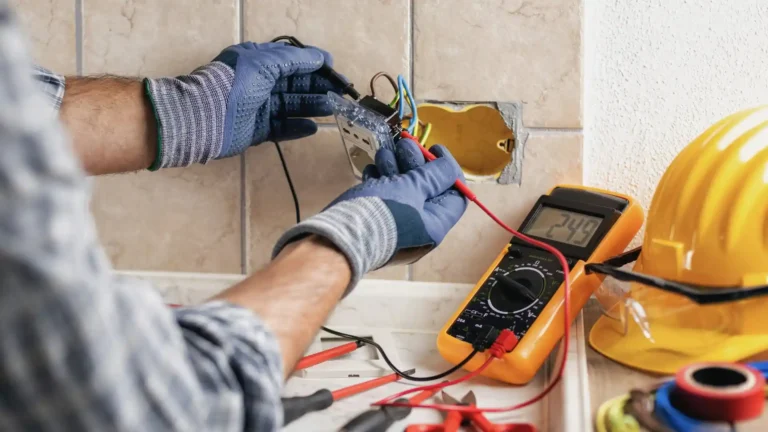
A domestic EICR involves more than a quick visual check. The electrician assesses relevant parts of the fixed electrical installation and carries out appropriate inspection and testing.
Area Inspected | What Is Checked During a Domestic EICR |
Consumer Unit and Fuse Board | General condition, protective devices, signs of damage, overheating and other relevant electrical safety concerns. |
Fixed Wiring and Electrical Circuits | The condition and performance of circuits are assessed using appropriate electrical testing procedures. Testing can identify faults that may not be visible during a visual inspection. |
Sockets, Switches and Electrical Accessories | Accessible accessories can be checked for damage, deterioration, overheating, poor connections, unsuitable alterations and other safety concerns. |
Earthing and Bonding | Relevant earthing and bonding arrangements are checked to determine whether protective measures are suitable for the installation being assessed. |
RCDs and Protective Devices | Where RCDs and other protective devices are installed, appropriate checks and tests can form part of the inspection. |
Electrical Shock, Overheating and Fire Risks | The inspection looks for conditions that could increase the risk of electric shock, overheating, fire or other electrical hazards. |
What Problems Can a Domestic EICR Identify?
An EICR may reveal obvious defects as well as issues that can be difficult for a property owner to identify without electrical testing.
Problems may include:
- Deteriorated wiring
- Damaged electrical accessories
- Earthing or bonding issues
- Defective protective devices
- Signs of overheating
- Unsafe alterations
- Incorrect electrical work
- Circuit defects
- Conditions requiring further investigation
Finding a defect does not automatically mean the entire electrical installation needs replacing. The appropriate action depends on the nature and severity of the issue
Understanding Your Domestic EICR Report
Once testing has been completed, the findings are recorded in the EICR. The report provides an overall assessment and records relevant Understanding C1, C2, C3 and FI EICR Codes
EICR Code | Meaning | What It Means | Action Required |
C1 | Danger Present | An immediate electrical danger has been identified. | Immediate action required |
C2 | Potentially Dangerous | A defect has been identified that could present a safety risk. | Remedial work required |
C3 | Improvement Recommended | The installation could be improved, but the issue does not make the EICR unsatisfactory on its own. | Improvement recommended |
FI | Further Investigation Required | More investigation is needed to determine the nature and extent of a potential electrical issue. | Further investigation required without delay |
Your existing report section uses these four classifications and identifies C1, C2 or FI as making the overall assessment unsatisfactory. Pasted markdown
If your report is unsatisfactory, Liviosiv can provide a quotation for the required EICR remedial works or further investigation.
What Happens After an Unsatisfactory Domestic EICR?
Receiving an unsatisfactory report does not necessarily mean the entire electrical installation needs replacing. The first step is to review the observations and understand which items require action.
Reviewing the Defects in Your EICR Report: Each relevant defect is recorded with a classification. This helps establish the nature of the problem and what needs to be addressed.
Residential EICR Remedial Works: Liviosiv can provide a quotation for EICR remedial works where required. The exact work depends on the findings and may involve repairing, replacing or correcting parts of the electrical installation.
Further Electrical Investigation: Where an FI observation is recorded, further investigation may be needed before the appropriate repair can be confirmed.
Electrical Certification After Completed Remedial Work: Appropriate documentation should be provided for qualifying remedial work. For landlord properties covered by the private rented sector electrical safety regulations, written confirmation of completion of required remedial or further investigative work is important.
Treating all residential properties as one uniform category misses a lot of real-world nuance. Here’s how testing considerations actually differ across London’s housing stock and sectors.
Flats and Apartments — Shared Wiring Considerations
Flats, particularly in older converted buildings, often share elements of the electrical supply with neighbouring units — a communal consumer unit or shared intake, for example. This shared wiring can introduce risks that don’t exist in a standalone house, so it’s worth flagging any communal electrical arrangements to your engineer before the inspection.
Houses and Single-Tenant Properties
A single-tenant house or flat is generally the most straightforward domestic eicr, or residential eicr certificate, to arrange one consumer unit, a predictable circuit count, and no shared-services complexity to account for.
HMOs — Additional Complexity and Licensing Links
Houses in Multiple Occupation carry additional complexity: more circuits, sometimes multiple consumer units, and often a closer relationship between your EICR and your HMO licensing conditions with the local council. HMO landlords should also be aware that many London boroughs run their own selective and additional licensing schemes, which can carry their own electrical safety documentation requirements alongside the national PRS Regulations.
Homebuyer and Pre-Purchase EICRs
Commissioning an EICR before you complete a purchase gives you a clear, documented position on the electrical condition of the property useful leverage in price negotiations if remedial work is identified, and peace of mind if it isn’t.
Letting Agents and Portfolio Landlords
We also work directly as a letting agent EICR service, supporting agents and portfolio landlords who need renewal dates aligned across multiple properties rather than managed as separate one-off bookings, with a single point of contact for scheduling and certification across every tenancy in a portfolio.
Whichever property type or sector applies to you, the qualifications behind whoever carries out your test matter just as much as the test itself.
Our Domestic EICR Testing Process
We keep the booking, inspection and reporting process straightforward.
Book inspection
Inspection and testing
Report issued
Residential Property Types We Cover
Different homes can have different electrical layouts, circuit arrangements and access requirements. Liviosiv provides residential EICR inspections for a wide range of domestic properties across London.
EICR Testing for Studio Flats: We provide EICR testing for studio apartments and compact residential properties.
EICR Testing for Flats and Apartments: Our service covers individual flats within purpose-built blocks, converted buildings and residential developments.
EICR Testing for Houses: Domestic EICRs are available for terraced, semi-detached and detached houses of different sizes.
EICR Testing for Rental Properties: We provide electrical inspection and testing for privately rented houses, flats and apartments. Access can be coordinated with landlords, tenants or managing agents where required.
EICR Testing for HMOs: We provide EICR inspections for Houses in Multiple Occupation and can assess the relevant fixed electrical installation.
EICR Testing for Maisonettes: Residential EICR testing is available for maisonettes of different sizes and electrical layouts.
EICR Testing for Converted Properties: Converted buildings may contain electrical installations that have been changed or extended over time. An EICR can help establish the current condition of the fixed installation.
EICR Testing for Older Homes: Older properties do not automatically have unsafe electrical installations. However, age, previous alterations and deterioration can make periodic inspection particularly useful.
EICR Testing for Residential Developments: We can provide EICR testing for individual properties within larger residential developments.
Who We Provide Domestic EICR Testing For
Our domestic electrical inspection service supports individual property owners as well as organisations responsible for multiple residential properties.Homeowners: Residential electrical safety inspections can help homeowners understand the condition of their fixed electrical installation.Private Landlords: We provide landlord EICR testing for rented homes and support landlords with relevant electrical inspection and reporting requirements.Letting Agents: Domestic EICRs can be arranged for individual rental properties or multiple properties under management.Property Management Companies: We can coordinate electrical inspections and reporting across residential property portfolios.HMO Landlords and Managers: EICR testing is available for Houses in Multiple Occupation and other managed residential accommodation.Housing Associations: Residential electrical inspection and testing can be arranged for managed housing.Residential Development Managers: EICR inspections can be coordinated across individual apartments and residential developments.Why Choose Liviosiv for Domestic EICR Testing in London?
When arranging a residential EICR, the competence of the electrician and the quality of the inspection and reporting matter.
- Qualified and Competent Electricians – Domestic electrical inspection and testing carried out by appropriately qualified and competent electrical professionals.
- NICEIC and NAPIT Registered Electricians – Professional electrical services supported by NICEIC and NAPIT registered electricians.
- City & Guilds Qualified Professionals – Electrical professionals with relevant City & Guilds qualifications, training and technical knowledge.
- Part P Electricians – Part P electricians available for qualifying domestic electrical work, including work required following an EICR.
- Digital EICR Reports – Clear reports recording relevant test results, observations, classification codes and the overall assessment.
- EICR Remedial Works – Separate quotations available where defects or further electrical work are identified.
- Electrical Certification – Appropriate electrical documentation provided for qualifying completed remedial works.
- Clear Residential Pricing – Straightforward pricing based on the property and agreed inspection scope.
- Homeowners and Landlords – EICR services for owner-occupied homes and residential rental properties.
- Multiple-Property Bookings – Coordinated EICR testing for landlords, letting agents and property managers with multiple properties.
- Tenant Access Coordination – Access can be arranged with tenants, landlords or managing agents where required.
- London & M25 Coverage – Domestic EICR testing available across London and surrounding M25 areas.
- Fast Digital Reporting – EICR reports are normally issued within 24 hours following completion and payment.
Domestic EICR Standards, Regulations and Professional Competence
Electrical inspection and testing should be carried out by a person with the appropriate competence for the work.
BS 7671 and Domestic Electrical Safety: Periodic inspection and testing is carried out with reference to the requirements for electrical installations set out in BS 7671, commonly known as the IET Wiring Regulations.
The EICR records the condition of the installation against the relevant safety requirements applicable to periodic inspection.
Electrical Safety Standards for Private Rented Properties: Private rented properties within scope of the Electrical Safety Standards in the Private Rented Sector (England) Regulations 2020 are subject to specific electrical inspection and testing requirements. Landlords should follow the required inspection intervals and take appropriate action where remedial work or further investigation is required.
Part P and Domestic Electrical Work: Part P relates to electrical safety requirements for certain electrical installation work in dwellings. Where qualifying domestic electrical work is required following an EICR, Liviosiv has Part P electricians available to support appropriate electrical work and documentation.
Professional Residential EICR Reporting: A useful EICR should do more than provide a simple pass or fail statement.
It should clearly record:
- Details of the installation
- Extent and limitations of the inspection
- Inspection findings
- Relevant test results
- Observations
- Classification codes
- Overall assessment
- Recommended date for the next inspection
This gives the homeowner, landlord or responsible person a meaningful record of the installation’s condition.
Areas We Cover for EICR Testing
Liviosiv provides professional EICR testing for residential and commercial properties across London, covering every area from Central London to the wider M25. Our electricians support landlords, homeowners, letting agents, property managers and businesses with electrical inspection and testing throughout the following locations.
Central London including Westminster (SW1), the City of London (EC1–EC4), Holborn and Bloomsbury (WC1), Covent Garden (WC2), Soho, Mayfair, Marylebone and Fitzrovia (W1), St James’s, Pimlico, Victoria and Belgravia (SW1), South Bank (SE1), Knightsbridge (SW1/SW7), Chelsea (SW3/SW10), Kensington (W8/W14), Paddington and Bayswater (W2), and Notting Hill (W11).
North London covering Barnet, Enfield, Haringey, Camden and Islington, including Highgate (N6), Muswell Hill (N10), Crouch End (N8), Finsbury Park (N4), Archway (N19), Hampstead (NW3), Golders Green (NW11), East, West and North Finchley (N3/N12/N2), Mill Hill (NW7), Totteridge and Whetstone (N20), Barnet (EN5), Enfield Town (EN2), Palmers Green (N13), Winchmore Hill (N21), Southgate (N14), Edmonton (N9/N18), Bounds Green (N11), Wood Green and Alexandra Palace (N22), Holloway (N7) and Islington (N1).
North West London covering Brent, Harrow, Camden and parts of Barnet and Ealing, including Cricklewood (NW2), Kilburn (NW6), Willesden, Neasden and Harlesden (NW10), Wembley (HA9), Alperton (HA0), Kingsbury and Colindale (NW9), Queensbury (HA8), Kenton (HA3), Harrow including Harrow on the Hill, South Harrow, North Harrow and Harrow Weald (HA1–HA3), Pinner (HA5), Ruislip (HA4), Stanmore (HA7), Edgware (HA8), Hendon and Brent Cross (NW4), and Swiss Cottage (NW3).
West London covering Hammersmith & Fulham, Ealing, Hounslow and Hillingdon, including Acton (W3), Chiswick (W4), Ealing and West Ealing (W5/W13), Northfields (W13), Hanwell (W7), Hammersmith (W6), Shepherd’s Bush and White City (W12), Holland Park (W11), Southall (UB1/UB2), Brentford (TW8), Isleworth (TW7), Hounslow and Osterley (TW3/TW7), Feltham (TW13), Hayes and Harlington (UB3/UB4), Uxbridge (UB8/UB10), Yiewsley and West Drayton (UB7).
South West London covering Wandsworth, Richmond, Kingston and Merton, including Putney (SW15), Wandsworth, Earlsfield and Southfields (SW18), Clapham Junction and Battersea (SW11), Balham (SW12), Tooting (SW17), Wimbledon and Colliers Wood (SW19), Raynes Park (SW20), Morden (SM4), Mitcham (CR4), Streatham and Norbury (SW16), Richmond (TW9/TW10), Twickenham (TW1/TW2), Teddington (TW11), Hampton (TW12), Kingston upon Thames (KT1/KT2), Surbiton (KT5/KT6) and New Malden (KT3).
South London covering Lambeth, Southwark and Croydon, including Brixton (SW2/SW9), Clapham (SW4), Stockwell (SW9), Vauxhall (SW8), Kennington (SE11), Elephant & Castle (SE1/SE17), Camberwell (SE5), Peckham (SE15), Dulwich and Herne Hill (SE21/SE22/SE24), Crystal Palace (SE19/SE20), Norwood including West, Upper and South Norwood (SE19/SE25/SE27), Thornton Heath (CR7), Croydon including Central, South, East, Purley and Coulsdon (CR0), Addiscombe, Shirley and Selhurst (CR0/SE25).
South East London covering Lewisham, Greenwich, Bexley and Bromley, including Deptford (SE8), New Cross (SE14), Brockley (SE4), Lewisham and Hither Green (SE13), Catford (SE6), Blackheath (SE3), Greenwich (SE10), Eltham (SE9), Woolwich and Plumstead (SE18), Abbey Wood (SE2), Thamesmead (SE28), Bexleyheath (DA6/DA7), Welling (DA16), Sidcup (DA14/DA15), Chislehurst (BR7), Bromley (BR1/BR2), Beckenham (BR3), Orpington (BR5/BR6), and Penge, Anerley and Grove Park (SE20/SE12).
East London covering Hackney, Tower Hamlets, Newham, Barking & Dagenham, Redbridge, Havering and Waltham Forest, including Shoreditch and Hoxton (EC2/N1), Bethnal Green and Whitechapel (E2/E1), Stepney (E1), Poplar and Canary Wharf (E14), Bow (E3), Stratford (E15/E20), Forest Gate (E7), Plaistow (E13), East Ham (E6), West Ham and Canning Town (E15/E16), Beckton (E6), Barking (IG11), Dagenham and Chadwell Heath (RM6/RM8–RM10), Ilford, Seven Kings and Goodmayes (IG1–IG3), Romford and Gidea Park (RM1–RM7), Hornchurch (RM11/RM12), Upminster (RM14), Wanstead (E11), Leyton and Leytonstone (E10/E11), Walthamstow (E17), Chingford (E4), and Woodford Green (IG8).
Surrounding Towns Just Outside the M25 extending to Watford (WD17–WD25), Bushey (WD23), Borehamwood and Elstree (WD6), Potters Bar (EN6), Cheshunt and Waltham Abbey (EN7–EN9), Epping, Loughton and Theydon Bois (CM16/IG10), Chigwell and Buckhurst Hill (IG7/IG9), Brentwood (CM13–CM15), Dartford and Swanley (DA1/DA2/BR8), Epsom and Ewell (KT17–KT19), Leatherhead (KT22), Ashford Middlesex (TW15), Staines-upon-Thames (TW18/TW19), Sunbury and Shepperton (TW16/TW17), and Rickmansworth and Chorleywood (WD3).
Need an EICR in your area? Call Liviosiv first to check availability, email our team for assistance, request a quote, or book your EICR certificate.
Domestic EICR Frequently Asked Questions
What Is a Domestic EICR?
A domestic EICR is an Electrical Installation Condition Report for a residential property. It assesses the condition of the fixed electrical installation and records defects or safety concerns identified during inspection and testing.
What Does EICR Stand For?
EICR stands for Electrical Installation Condition Report.
Is an EICR the Same as an Electrical Safety Certificate?
“Electrical safety certificate” is a broad term commonly used by customers. For periodic inspection and testing of an existing fixed electrical installation, the formal document is an Electrical Installation Condition Report.
How Much Does a Domestic EICR Cost in London?
Our typical prices start from £79 for a studio, with prices increasing according to property size and the scope of the electrical installation. Larger or more complex properties may require an individual quotation.
How Long Does a Domestic EICR Take?
The time required depends on the size of the property, number of circuits, number of consumer units, accessibility and condition of the electrical installation.
How Long Does an EICR Last?
The recommended date for the next inspection is stated on the EICR. For private rented properties in England that fall within the relevant regulations, electrical inspection and testing is required at intervals of no more than five years, or sooner if specified by the report.
Do Landlords Need an EICR?
Private landlords in England whose properties fall within the Electrical Safety Standards in the Private Rented Sector (England) Regulations 2020 must arrange periodic electrical inspection and testing in accordance with those requirements.
Do Homeowners Need an EICR?
There is no general requirement for every owner-occupied home to have a current EICR simply because it is occupied by the owner. However, periodic electrical inspection can provide useful information about the safety and condition of an installation.
Do I Need an EICR to Sell My House?
An EICR is not automatically required simply because you are selling an owner-occupied home. However, a seller or buyer may choose to arrange one to obtain more information about the electrical installation.
What Does an Electrician Check During an EICR?
The inspection can include the consumer unit, fixed wiring, circuits, earthing and bonding arrangements, protective devices and accessible parts of the electrical installation.
Qualified, Accredited & Trusted Electrical Professionals




 contact@liviosiv.co