
Professional Fire Door Maintenance London | Service for Residential and Commercial Properties
Liviosiv offers a professional fire door maintenance service throughout London for landlords, property managers, facilities teams, businesses, HMOs and residential developments who need reliable long-term fire door performance and ongoing compliance support.
Our maintenance approach is based on preventative servicing, operational reliability and practical fire safety management. We help clients identify maintenance issues early rather than just reacting to failed inspections or damaged doors, reducing long-term deterioration and keeping safer fire compartmentation throughout their buildings. Where maintenance visits uncover a defect that’s beyond routine servicing, our fire door remedial works or fire door repairs teams take it from there, and every completed maintenance, repair or remedial job can be backed by a fire door certificate confirming the work meets current standards.
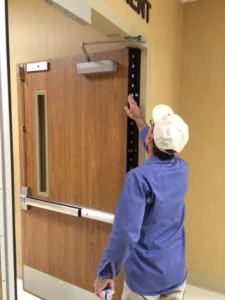
We supply and maintain communal fire doors, flat entrance doors, FD30 and FD30S fire doors, internal fire doors, commercial fire doors and external fire-rated doors for use across a wide variety of residential and commercial environments. We’re accredited by NICEIC, NAPIT, IFSM, City & Guilds, NEBOSH, TrustMark and the Gas Safe Register.
Fire Door Installers Services
Fire Safety Certificate
Fire Door Certificate
Fire Extinguisher Servicing
Fire Risk Assessment
Need Fire Door Maintenance in London?
See Our Landlord Safety Services & Pricing
Fire Extinguisher Test
£87 Per Extinguisher
Geographical Breakdown of London’s Districts
East London
South London
West London
North London
Our Fire Door Maintenance Process
We aim to provide a straightforward process focused on clarity, reliability and practical maintenance support.
Initial Property Review
Fire Door Assessment Visit
Maintenance and Remedial Works
Reporting and Maintenance Records
Fire Door Maintenance for Residential and Commercial Properties
Different buildings place different demands on fire doors. A communal corridor within a busy apartment block operates very differently from a fire door protecting an office riser cupboard or a plant room. Occupancy levels, traffic flow, environmental conditions and operational usage all influence how quickly fire doors deteriorate over time.
Liviosiv provides maintenance services for residential blocks, HMOs and shared accommodation, offices and commercial premises, mixed-use buildings, retail premises, schools and public buildings, property management portfolios, and landlord-owned residential properties.
In many buildings, fire door issues aren’t immediately obvious during normal use. Doors may continue opening and closing while hidden compliance concerns gradually develop in the background — small alignment problems, worn hinges, damaged seals or poorly adjusted closers can slowly affect smoke containment and operational reliability without attracting immediate attention. Our maintenance work is designed to identify those concerns before they develop into more serious operational or compliance issues, catching problems early enough that a repair rather than a full fire door replacement is usually all that’s needed.
Our Fire Door Maintenance Process
- Initial property review
- Fire door assessment visit
- Maintenance and remedial works, where needed
- Reporting and maintenance records, plus a fire door certificate where the visit involves repair or remedial work
Supporting Long-Term Fire Door Reliability and Compliance
Many property managers and Responsible Persons are moving away from purely reactive fire door repairs and instead adopting planned maintenance strategies to support long-term compliance and operational reliability. This approach helps reduce unexpected fire door failures, escalating remedial costs, repeat operational defects, building safety risks, emergency replacement works and ongoing compliance concerns.
Routine maintenance also supports wider fire safety management. Fire doors don’t operate independently, they form part of a larger fire protection strategy that includes compartmentation, evacuation planning and protected escape routes, all captured properly in a fire door survey. When fire doors aren’t maintained correctly, the reliability of that whole strategy can be affected.
Why Fire Door Maintenance London Is Essential for Building Safety
Fire doors are designed to resist the spread of fire and smoke between different areas of a building, protecting occupants, preserving escape routes and giving additional time for evacuation in an emergency. But a fire door only performs correctly if all associated components continue to operate as intended, a damaged seal, a badly adjusted closer or an excessive perimeter gap can significantly reduce the effectiveness of the door set during a fire. There is now a greater recognition across the UK fire safety sector of the need for ongoing maintenance, especially in managed commercial properties and higher-occupancy residential buildings.
How Fire Doors Support Compartmentation
Modern buildings rely heavily on compartmentation to control fire development. Fire doors help divide a building into protected sections designed to slow fire and smoke movement during an emergency. Correctly maintained fire doors help protect communal escape routes, reduce smoke spread through corridors and stairwells, support phased evacuation strategies, improve occupant safety, assist emergency service access, and reduce wider property damage. Smoke movement remains one of the most significant dangers during building fires, which is why operational smoke seals and self-closing devices matter so much.
The Operational Risks of Poor Fire Door Maintenance
In many buildings, fire doors experience gradual deterioration through repeated use rather than sudden failure. Small operational defects often develop over months or years — doors failing to self-close fully, excessive gaps around the frame, loose or worn hinges, damaged intumescent strips, painted-over smoke seals, faulty latching mechanisms, misaligned door leaves, damaged frames, and non-compliant hardware replacements. Although these defects may seem minor at first, they can affect how effectively the door performs during a fire.
Why Fire Door Components Matter
Fire doors rely on multiple components functioning together as a tested system. Overall performance depends not only on the door leaf itself, but also on the condition of the hinges, closers, smoke seals, intumescent strips, latches, locks, frames, glazing systems and threshold gaps. A closer that no longer fully closes the door, or missing smoke seals around the frame, may compromise compartmentation performance during an emergency.
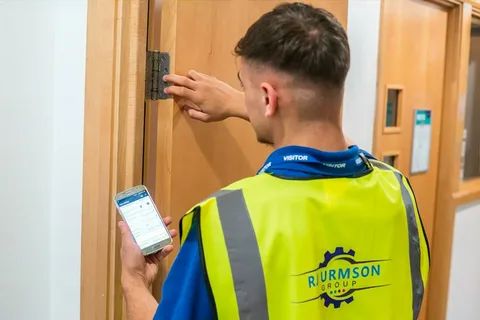
Fire Door Maintenance Responsibilities Under UK Fire Safety Regulations
Fire door maintenance London forms part of wider legal fire safety responsibilities across many residential and commercial buildings in London. Under UK fire safety legislation, Responsible Persons are expected to maintain fire safety systems and ensure fire doors remain in efficient working order throughout their operational life.
Regulatory Reform (Fire Safety) Order 2005 The Regulatory Reform (Fire Safety) Order 2005 places legal responsibilities on Responsible Persons to manage fire safety risks within non-domestic premises and communal areas of residential buildings, including maintaining fire doors and ensuring they continue providing suitable protection.
Fire Safety (England) Regulations 2022 The Fire Safety (England) Regulations 2022 introduced additional duties relating to fire doors within certain residential buildings, including regular checks of communal fire doors and flat entrance doors in qualifying buildings — reinforcing the importance of proactive inspection and maintenance rather than relying solely on reactive repairs after defects become serious.
Fire Door Responsibilities for Landlords and Managing Agents Landlords, managing agents and facilities teams are commonly responsible for maintaining communal fire doors and supporting safe evacuation routes within managed properties. Many residential blocks and HMOs contain multiple fire doors across corridors, stairwells, service cupboards and communal areas, often experiencing heavier operational demand and requiring more regular monitoring and maintenance.
Serving Fire Door Maintenance London
Liviosiv provides practical maintenance and remedial support designed around the operational requirements of each property. Some buildings require straightforward maintenance adjustments, while others involve larger programmes covering multiple fire doors across residential blocks or commercial premises.
Fire Door Condition Assessments
Maintenance work often begins with an assessment of the condition and operational performance of the door set — checking perimeter gaps, smoke seals, intumescent strips, hinges, closers, door alignment, frames, glazing systems, latching performance and door operation. This helps identify whether maintenance, remedial works or full replacement may be appropriate.
Call Us
Fire Door Repairs and Remedial Works We carry out a wide range of remedial works depending on the condition of the fire door, including closer adjustments and replacement, seal replacement, hinge replacement, hardware improvements, gap corrections, alignment adjustments, minor frame repairs and operational improvements. Where suitable, this may help restore reliable door performance without requiring immediate replacement. For more extensive fault-finding and repair work, see our full fire door repairs service.
Fire Door Closer Maintenance Self-closing devices are among the most heavily used components in many buildings. Closers may gradually become disconnected, poorly adjusted or worn through constant use — and in communal buildings, occupants sometimes interfere with closers, creating additional compliance concerns. We inspect, adjust and replace suitable fire-rated closers where appropriate.
Intumescent Strip and Smoke Seal Replacement Smoke seals and intumescent strips play an important role in controlling smoke and heat movement around the edges of the door. Over time, seals may become damaged, loose, painted over, detached or worn through use. Where appropriate, damaged seals are replaced using suitable fire-rated components.
Fire Door Alignment and Gap Adjustments Incorrect gaps around a fire door may affect smoke containment and fire resistance performance. Warping, movement within the building structure, repeated use and hardware deterioration can all affect alignment over time. Where possible, corrective adjustments are carried out to improve operational performance and door reliability.
Types of Fire Doors We Maintain
Internal fire doors, FD30 and FD30S fire doors, flat entrance fire doors, commercial fire doors, and fire doors with glazing systems.
Common Fire Door Problems We Help Resolve
Fire doors that fail to self-close, excessive perimeter gaps, damaged smoke seals, misaligned or warped fire doors, and non-compliant hardware — many of which are first picked up during a routine maintenance visit rather than a formal fire door survey.
Fire Door Repairs or Full Fire Door Replacement
One of the most common questions clients ask is whether an existing fire door can realistically be maintained or whether replacement is required. The answer depends on the condition of the door set, the extent of deterioration, any structural damage or previous modifications, operational reliability, and whether suitable compliance can realistically be restored.
When Fire Doors Can Often Be Maintained Many fire doors remain serviceable with suitable remedial works and ongoing maintenance, seal replacement, closer replacement, gap corrections, hardware improvements and minor alignment works. Where practical, maintaining existing fire doors reduces unnecessary replacement costs.
When Fire Door Replacement May Be Necessary Replacement may become necessary where structural damage is severe, excessive modifications have been carried out, the door set can’t achieve suitable tolerances, significant warping affects operation, or reliable compliance can no longer be maintained. In these situations, replacement provides the safest long-term solution, see our dedicated fire door installation page for the full process.
Fire Door Maintenance for Different Property Types Across London
HMOs, often experience particularly heavy fire door usage due to higher occupancy levels and shared circulation areas. Kitchen doors, corridor doors and communal fire doors may need more frequent maintenance attention.
Residential Blocks, frequently contain multiple communal fire doors protecting corridors, stairwells and service areas; ongoing maintenance supports compartmentation and safer evacuation routes.
Commercial Premises, rely heavily on fire doors protecting offices, service areas and escape routes; daily operational use can gradually affect performance, particularly in busy environments.
Managing Agents and Facilities Teams, often oversee multiple buildings with ongoing compliance responsibilities; we support property professionals with practical maintenance programmes, inspections and remedial recommendations across London.
Fire Door Maintenance for Different Property Types Across London
HMOs — often experience particularly heavy fire door usage due to higher occupancy levels and shared circulation areas. Kitchen doors, corridor doors and communal fire doors may need more frequent maintenance attention.Residential Blocks — frequently contain multiple communal fire doors protecting corridors, stairwells and service areas; ongoing maintenance supports compartmentation and safer evacuation routes.Commercial Premises — rely heavily on fire doors protecting offices, service areas and escape routes; daily operational use can gradually affect performance, particularly in busy environments.Managing Agents and Facilities Teams — often oversee multiple buildings with ongoing compliance responsibilities; we support property professionals with practical maintenance programmes, inspections and remedial recommendations across London.Why Clients Choose Liviosiv for Fire Door Maintenance
- Accredited by NICEIC, NAPIT, IFSM, City & Guilds, NEBOSH, TrustMark and the Gas Safe Register
- Professional, maintenance-focused approach rather than reactive fixes only
- Practical compliance support, with certification issued where relevant
- Responsive support across London
- Support for ongoing property compliance, across residential and commercial portfolios alike
Properly maintained fire doors help support safer buildings by slowing the spread of fire and smoke and protecting escape routes during emergencies. While no maintenance programme can remove every fire risk, ongoing maintenance and timely remedial works can significantly improve the reliability and operational performance of fire doors throughout a property portfolio.
Book Your Fire Door Maintenance Visit
Our team can discuss your property requirements, explain suitable maintenance options and help you arrange the next steps for your building or portfolio.
Frequently Asked Questions (FAQ)
How Often Should Fire Doors Be Maintained?
The required frequency depends on the building type, occupancy level and operational usage. Higher-traffic environments often require more regular maintenance, see our fire door survey page for formal inspection frequency guidance.
Can Existing Fire Doors Be Repaired Instead of Replaced?
In many situations, suitable maintenance and remedial works can restore reliable performance without requiring full replacement.
Why Are Smoke Seals Important?
Smoke seals help reduce smoke movement around the edges of the fire door during an emergency.
Do Fire Doors Need To Self-Close Properly?
Yes. Fire doors should close fully and latch correctly to support effective compartmentation.
Do HMOs Require Fire Door Maintenance?
Yes. HMOs commonly contain multiple fire doors protecting escape routes, communal corridors and kitchens.
Do You Provide Maintenance Reports?
Yes, maintenance notes, recommendations and photographic evidence are provided where required, along with a fire door certificate where the visit involves repair or remedial work.
Accrediations



 contact@liviosiv.co