
Fire Alarm Maintenance London
Keeping your fire alarm system in proper working order isn’t just good practice—it’s a legal responsibility and one of the most important steps you can take to protect lives and property. At Liviosiv, we provide professional Fire Alarm Maintenance London services for landlords, homeowners, businesses, managing agents, housing associations, and commercial property owners throughout Greater London.
Our qualified engineers carry out planned fire alarm servicing, routine testing, fault diagnosis, preventative maintenance, and compliance inspections for all major fire alarm systems. Whether you require a one-off service visit, an annual maintenance contract, or emergency fault attendance, we ensure your fire detection system remains fully operational and compliant with the latest British Standards.
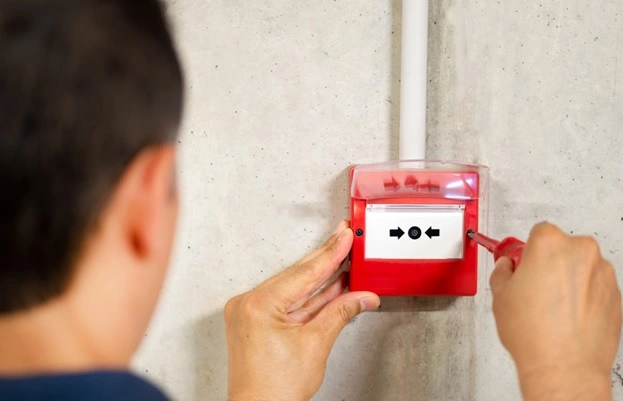
We maintain domestic, residential, HMO, and commercial fire alarm systems in accordance with BS 5839-1:2025, BS 5839-6, and the Regulatory Reform (Fire Safety) Order 2005, providing comprehensive maintenance reports that satisfy insurers, local authorities, fire risk assessors, and enforcing authorities.
Fire Alarm services
Fire Alarm Installation London
Fire Alarm Servicing London
Commercial Fire Alarm Installtion
Complete Landlord Safety Certificate Services
Electrical Safety Services
Fire Safety Services
Energy Performance Certificate
Gas Safety Certificate
Fire Risk Assessment
Asbestos Survey
Need Fire Alarm Installation London in London?
Geographical Breakdown of London’s Districts
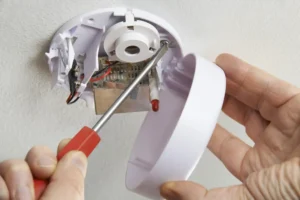
What is Fire Alarm Maintenance?
Fire alarm maintenance is the planned inspection, testing, servicing, and preventative care of a fire detection and alarm system to ensure it continues operating correctly when needed most. A fire alarm system that is not regularly maintained can develop faults that prevent early fire detection, delay evacuation, or generate repeated false alarm, all of which place lives, property, and businesses at risk.
Whether you require fire alarm system maintenance for a residential property or commercial fire alarm maintenance for a large office, warehouse, retail unit, school, or apartment block, every maintenance visit should include a systematic inspection of the entire system by a competent engineer.
A typical maintenance visit includes:
Functional testing of smoke, heat, and multi-sensor detectors, Manual call point testing, Sounder and beacon operation checks, Fire alarm control panel inspection, Battery and standby power testing, Power supply verification, Fault history review, Detector contamination assessment, Device communication testing, Fire alarm logbook inspection, Recommendations for remedial works where required, Written compliance report
Regular servicing helps identify developing faults before they become major failures, extending the lifespan of your fire alarm system while ensuring ongoing legal compliance.
Our Complete Landlord Safety Certificate Services in London
Gas Safety Certificate
Certified EICR inspections to ensure your property’s wiring is safe, compliant, and legally approved.
Fire Safety Services
Complete fire safety inspections, alarms, and compliance solutions to protect your property and occupants.
Energy Performance Certificate (EPC)
Fast and accurate EPC assessments to rate your property’s energy efficiency and meet legal requirements.
Asbestos Survey
Professional asbestos surveys to identify risks and ensure full compliance with UK safety regulations.
Inventory Services
Detailed property inventory reports with photos to protect landlords, agents, and tenants.
Legionella Services
Legionella risk assessments and water testing to maintain safe and compliant water systems.
Why Regular Fire Alarm Maintenance Matters
Many property owners only think about their fire alarm system when it activates. In reality, a fire alarm is a life safety system that should be continually maintained to ensure it performs exactly as designed during an emergency.
A poorly maintained system may fail to detect a fire, suffer battery failure during a power outage, or generate unnecessary false alarms that lead occupants to ignore future warnings. Regular maintenance significantly reduces these risks while protecting both people and property.
Professional fire alarm maintenance provides several important benefits:
- Protects occupants by ensuring rapid fire detection
- Reduces costly false alarms
- Identifies faults before they become serious failures
- Helps satisfy insurance requirements
- Supports compliance with UK fire safety legislation
- Reduces expensive emergency repair costs
- Extends the operational life of fire alarm equipment
- Maintains manufacturer warranties where applicable
- Improves reliability during genuine emergencies
For businesses, an unexpected fire alarm failure can interrupt operations, expose the Responsible Person to enforcement action, and potentially invalidate insurance cover. Routine servicing is a small investment compared with the financial and legal consequences of an unmaintained system.
Fire Alarm Maintenance is a Legal Requirement in London
For many buildings, fire alarm maintenance is not optional—it is a legal obligation.
If you are responsible for a commercial building, HMO, apartment block, office, shop, warehouse, school, healthcare premises, or any other non-domestic property, UK fire safety legislation requires your fire alarm system to be properly maintained.
The duty applies regardless of whether you own the building or simply manage it on behalf of someone else.
Failure to maintain a fire alarm system may lead to:
- Enforcement Notices
- Alterations Notices
- Prohibition Notices
- Criminal prosecution
- Significant financial penalties
- Increased liability following a fire
- Difficulties with insurance claims
Maintaining your fire alarm demonstrates that reasonable fire safety measures are in place to protect occupants and comply with your legal responsibilities.
Our Fire Alarm Installation Process
Initial Enquiry and Property Details
Site Survey, Floor Plan Review or Existing System Check
System Design, Detector Layout and Written Specification
Professional Installation by Qualified Fire Alarm Installers
Testing, Commissioning and Final Safety Checks
Handover, User Guidance, Logbook Advice and Certification
Regulatory Reform (Fire Safety) Order 2005
The Regulatory Reform (Fire Safety) Order 2005 places a legal duty on the Responsible Person to ensure that fire safety systems are maintained in an efficient state, in efficient working order, and in good repair.
The Responsible Person may include:
Commercial landlords, Employers, Building owners, Freeholders, Managing agents, Housing associations, Facilities managers, Business owners, Property management companies
Fire authorities can request evidence that maintenance has been carried out correctly, including servicing records, maintenance reports, and fire alarm logbooks. If these records cannot be produced during an inspection, enforcement action may follow.
Our maintenance reports provide the documentation required to demonstrate compliance with your legal duties.
Fire Alarm Standards We Follow
Professional fire alarm maintenance should always be carried out in accordance with the latest recognised British Standards.
At Liviosiv, our servicing procedures follow current industry guidance, including:
BS 5839-1:2025
This standard covers fire detection and fire alarm systems installed within non-domestic premises such as:
Offices, Schools, Retail premises, Warehouses, Hotels, Apartment blocks, Commercial buildings, Mixed-use developments
BS 5839-1:2025 recommends that most commercial fire alarm systems receive professional servicing at least every six months, although higher-risk buildings may require quarterly inspections.
The latest 2025 edition includes updated servicing guidance, documentation requirements, testing procedures, and recommendations for maintaining modern fire detection systems.
BS 5839-6
Domestic fire alarm systems installed within houses, flats, and smaller residential buildings are generally maintained in accordance with BS 5839-6.
This standard applies to:
Owner-occupied homes, Rental properties, HMOs, Flats, Maisonettes, Supported accommodation, Small residential buildings
It also defines the various grades and categories of domestic fire alarm systems, including Grade D, Grade A, LD1, LD2, and LD3 systems.
Fire Safety Act 2021
The Fire Safety Act 2021 strengthens fire safety responsibilities by clarifying that Responsible Persons must consider building structure, external walls, entrance doors, and associated fire protection systems as part of ongoing fire safety management.
A properly maintained fire alarm system forms an essential part of meeting these wider responsibilities.
Building Safety Act 2022
For higher-risk residential buildings, the Building Safety Act places even greater emphasis on effective building safety management, including the ongoing maintenance of life safety systems such as fire detection and alarm installations.
Maintaining accurate servicing records supports compliance with these evolving building safety requirements.
Why Choosing a Competent Fire Alarm Maintenance Company Matters
Not all maintenance providers deliver the same level of inspection or technical expertise.
Choosing an experienced and accredited fire alarm maintenance company means your system is inspected by engineers who understand the latest British Standards, manufacturer recommendations, and current fire safety legislation.
At Liviosiv, our engineers don’t simply tick boxes—we carry out thorough inspections, identify developing faults before they become major failures, explain any remedial work required, and provide clear compliance documentation after every visit.
Whether your property contains a simple interlinked domestic alarm or a complex addressable commercial fire alarm system, our goal is the same: ensuring your fire detection system will perform reliably when it matters most.
Our Fire Alarm Servicing & Maintenance Service
At Liviosiv, we provide comprehensive fire alarm servicing and maintenance in London for domestic, residential, HMO, and commercial properties. Our planned maintenance visits are designed to ensure your fire detection system remains reliable, compliant, and capable of responding immediately in the event of a fire.
Whether you have a single interlinked domestic smoke alarm system or a complex multi-panel addressable installation, our experienced engineers follow a structured maintenance procedure based on the latest BS 5839 recommendations and manufacturer guidance.
Our maintenance services are available as one-off visits or ongoing maintenance contracts, giving property owners complete peace of mind that their fire alarm systems remain compliant throughout the year.
What’s Included in Every Fire Alarm Maintenance Visit
Every maintenance visit is carried out methodically to ensure every critical component of the fire alarm system is inspected, tested, and operating correctly.
Our standard fire alarm maintenance includes:
Fire Alarm Control Panel Inspection
The control panel is the heart of any fire alarm system. Our engineers inspect the panel for:
Active faults and warning indicators, System event history, Zone functionality, Display operation, Control functions, Internal components, Fuse condition, Power supply performance, Correct programming settings
Any faults or irregularities are investigated and recorded within the maintenance report.
Detector Testing
Each maintenance visit includes functional testing of smoke, heat, and multi-sensor detectors to verify they activate correctly and communicate with the control panel.
We also inspect detectors for:
Dust contamination, Damage, Obstructions, Incorrect positioning, Signs of ageing, Environmental deterioration
Where necessary, detectors are cleaned, adjusted, or recommended for replacement.
Manual Call Point Testing
Manual call points are tested to ensure they:
Activate the fire alarm correctly, Report accurately to the control panel, Reset correctly after testing, Remain clearly visible and unobstructed
We rotate call point testing throughout scheduled maintenance visits in accordance with current British Standards.
Sounders, Bells & Visual Warning Devices
A fire alarm is only effective if occupants can hear or see it.
During maintenance we test:
Internal sounders, External sounders, Electronic bells, Sirens, Voice alarm interfaces, Flashing beacons, Visual alarm devices
This confirms adequate warning throughout the building.
Battery & Standby Power Testing
Fire alarm systems must continue operating during mains power failure.
Our engineers inspect:
Standby batteries, Battery charging circuits, Voltage output, Battery age, Capacity, Power supply equipment
Where batteries are approaching the end of their service life, we recommend replacement before failure occurs.
Device Communication Testing
For addressable and wireless fire alarm systems we verify communication between field devices and the control panel, ensuring every detector, call point, interface, and sounder responds correctly.
Fire Alarm Logbook Review
We review the site’s fire alarm logbook to confirm:
Weekly user tests are being completed, Previous faults have been resolved, False alarms have been investigated, Maintenance history is up to date, Required records are being maintained
Where records are incomplete, we provide guidance to help the Responsible Person remain compliant.
Compliance Report
Following every maintenance visit you will receive a detailed maintenance report containing:
Equipment tested, Tests completed, Faults identified, Components replaced, Recommended remedial works, Compliance observations, Future servicing recommendations
These reports provide valuable evidence for insurers, fire authorities, auditors, and fire risk assessors.
Geographical Breakdown of London’s Districts
Common Fire Alarm Faults We Regularly Identify
Routine servicing allows small issues to be identified before they develop into major system failures.
Some of the most common faults our engineers encounter include:
contaminated smoke detectors, failed detector heads, ageing backup batteries, panel earth faults, open or short circuit faults, damaged manual call points, sounders not operating correctly, disabled detector zones, incorrect detector positioning, wiring defects, water-damaged devices, loose cable terminations, power supply faults, communication faults on addressable systems, and devices that have reached the manufacturer’s recommended replacement age.
Identifying these issues during planned maintenance helps prevent unexpected system failures and costly emergency repairs.
Fire Alarm Repairs During Maintenance
Where faults are identified, we aim to resolve them as quickly as possible.
Our engineers can repair or replace many components during the maintenance visit, including:
smoke detectors, heat detectors, multi-sensor detectors, manual call points, sounders, flashing beacons, batteries, power supply units, detector bases, interface modules, control panel components, and faulty wiring connections
If more extensive remedial work is required, we provide a clear quotation with no hidden charges before any additional work is undertaken.
Our Fire Alarm Maintenance Process
We believe fire alarm maintenance should be straightforward, transparent, and fully documented. Our process ensures every property receives the same high standard of service.
Arrange Your Maintenance Visit
We schedule your maintenance appointment at a convenient time, whether you require a one-off service or an ongoing maintenance contract.
Engineer Attendance
One of our qualified engineers attends your property with the appropriate testing equipment and begins a systematic inspection of the fire alarm installation.
Complete System Testing
Each component of the system is tested in accordance with British Standards, including detectors, manual call points, sounders, control panels, standby batteries, interfaces, and associated equipment.
Identify Any Faults
If faults, damage, contamination, or ageing equipment are identified, we explain the issue clearly and advise on the most appropriate solution.
Repairs (Where Appropriate)
Many common faults can be rectified during the maintenance visit, subject to parts availability and client approval.
Compliance Documentation
Once testing is complete, we provide a comprehensive maintenance report detailing the work undertaken, system condition, and any recommendations for future action.
Emergency Fire Alarm Call-Outs
Fire alarm faults don’t always occur during scheduled maintenance visits. If your system develops a fault unexpectedly, prompt action is essential to maintain building safety and minimise disruption.
Our engineers can attend properties across London to investigate issues such as:
fire alarm panel faults, continuous alarm sounding, detector failures, power supply failures, fault warnings, zone failures, communication errors, battery faults, false alarm investigations, and system reset issues
Following diagnosis, we will explain the cause of the fault and recommend the most effective repair solution.
Same-Day Fire Alarm Maintenance & Fault Attendance
Where availability allows, Liviosiv offers same-day fire alarm maintenance and emergency fault attendance across Greater London.
This service is particularly valuable for:
commercial premises, offices, HMOs, apartment blocks, schools, healthcare facilities, retail units, warehouses, and property management companies.
Our engineers aim to restore your fire alarm system to full operational condition as quickly as possible while ensuring all work complies with current British Standards.
How Often Should a Fire Alarm Be Serviced?
The required servicing frequency depends on the type of building, the complexity of the fire alarm system, and the level of fire risk identified within the premises.
For most commercial properties, BS 5839-1:2025 recommends professional servicing at least every six months. Higher-risk premises—such as care homes, hotels, hospitals, large HMOs, or buildings with complex fire alarm installation, may require quarterly maintenance to ensure continued reliability and compliance.
Domestic fire alarm systems installed in houses and flats should also be inspected and maintained periodically in accordance with BS 5839-6 and the manufacturer’s guidance. In addition to engineer servicing, property owners and Responsible Persons should carry out routine user checks, including weekly manual call point tests (where applicable), regular visual inspections, and monthly checks of standby power and associated life safety systems.
If you’re unsure how often your fire alarm system should be serviced, our engineers can assess your property and recommend a maintenance schedule based on its size, occupancy, fire risk, and legal obligations.
Fire Alarm Systems We Maintain
At Liviosiv, we maintain virtually every type of fire alarm system installed in residential, commercial, and mixed-use buildings throughout London. Whether your property has a simple interlinked domestic alarm system or a complex multi-panel addressable installation, our qualified engineers have the expertise to service and maintain it in accordance with the latest British Standards.
If you’re unsure what type of fire alarm system is installed in your building, we can identify it during our initial maintenance visit and advise whether it remains suitable for your property’s current use and fire risk profile.
Grade A, Grade D, LD1, LD2 & LD3 Fire Alarm Systems
Different properties require different levels of fire protection. The type of system installed determines the maintenance procedures, servicing frequency, and testing requirements.
Grade A Fire Alarm Systems
Grade A systems are the highest standard of fire alarm installation and are commonly found in:
HMOs, Apartment blocks, Care homes, Hotels, Schools, Offices, Commercial premises, Mixed-use buildings
These systems include:
Fire alarm control panels, Smoke detectors, Heat detectors, Manual call points, Sounders, Visual alarm devices, Interface units
Due to their complexity, Grade A systems require professional servicing in accordance with BS 5839-1:2025 and should typically be maintained every six months or more frequently where required.
Grade D Fire Alarm Systems
Grade D systems are commonly installed in:
Houses, Flats, Rental properties, Small residential buildings
They consist of interlinked mains-powered smoke and heat alarms with battery backup and are maintained in accordance with BS 5839-6.
Although simpler than commercial systems, Grade D alarms still require routine testing and periodic servicing to ensure reliable operation.
LD1 Fire Alarm Systems
LD1 provides the highest level of life protection within domestic premises.
Smoke or heat detectors are installed throughout the property, including:
Escape routes, Living rooms, Bedrooms, Kitchens, Utility rooms, Lofts,Cupboards where appropriate
Because LD1 systems contain the greatest number of devices, maintenance visits are generally more comprehensive.
LD2 Fire Alarm Systems
LD2 systems protect escape routes together with higher-risk rooms such as:
Kitchens, Boiler rooms, Utility rooms, Integral garages
They are widely used in rental properties and HMOs where enhanced life protection is required.
LD3 Fire Alarm Systems
LD3 systems concentrate on protecting escape routes.
Smoke alarms are generally installed in:
Hallways, Landings, Stairwells
While LD3 provides less coverage than LD1 or LD2, regular maintenance remains essential to ensure occupants receive early warning in an emergency.
Conventional Fire Alarm Systems
Conventional fire alarm systems divide a building into zones, allowing the control panel to indicate the general location of an alarm or fault.
They remain popular in:
Small offices, Shops, Schools, Churches, Warehouses, Industrial units, Smaller commercial buildings
During maintenance we inspect:
Detection zones, Circuit integrity, End-of-line devices, Sounder circuits, Panel operation, Power supplies
Conventional systems remain highly reliable when properly maintained.
Addressable Fire Alarm Systems
Addressable systems identify the exact detector or device that has activated, making them ideal for larger or more complex buildings.
They are commonly installed within:
Hotels, Apartment blocks, Universities, Hospitals, Shopping centres, Office buildings, Industrial facilities, Large commercial premises
Our engineers maintain:
Addressable detectors, Loop wiring, Input/output modules, Interface units, Voice alarm interfaces, Networked panels, Repeat panels, Cause and effect programming, Loop integrity
Regular maintenance helps ensure every device communicates correctly with the control panel and reduces the risk of unexpected system faults.
Wireless Fire Alarm Systems
Wireless fire alarm systems eliminate much of the cabling found in traditional installations, making them ideal for:
Listed buildings, Heritage properties, Churches, Museums, Temporary buildings, Occupied commercial premises, Our maintenance includes:, Battery condition checks, Wireless signal strength testing, Device communication verification, Detector testing, Control panel inspection, Firmware and programming review where applicable
Proper maintenance helps maximise battery life while ensuring reliable communication between all wireless devices.
Fire Alarm Manufacturers We Service
Our engineers are experienced in maintaining systems from many of the UK’s leading fire alarm manufacturers.
We regularly service equipment from:
Apollo, Hochiki, Kentec, Advanced, Gent, C-Tec, Ziton, Morley, EMS, Hyfire, Notifier, Honeywell, Fike, Haes, Protec
Changing your maintenance provider does not mean replacing your existing fire alarm system. We can take over the servicing of most professionally installed systems while ensuring they continue to operate safely and efficiently.
Fire Alarm Maintenance Contracts
Regular servicing is the most effective way to keep your fire alarm system compliant, reliable, and ready to respond in an emergency.
Liviosiv offers flexible fire alarm maintenance contracts tailored to residential and commercial properties of all sizes.
Our maintenance contracts can include:
Annual servicing, Six-monthly servicing, Quarterly maintenance, Planned preventative maintenance (PPM), Emergency call-out support, Fault diagnosis, Compliance reporting, Service reminders, Maintenance history records, Priority engineer attendance, Multi-site management
Whether you manage a single rental property or a large commercial portfolio, we can create a maintenance schedule that aligns with your legal obligations, fire risk assessment recommendations, and insurer requirements.
Domestic vs Commercial Fire Alarm Maintenance
Although the objective is the same—ensuring reliable fire detection—the maintenance requirements for domestic and commercial systems differ considerably.
Domestic Fire Alarm Maintenance | Commercial Fire Alarm Maintenance |
Grade D or Grade A residential systems | Grade A commercial systems |
Houses and flats | Offices, warehouses, shops, schools, hotels |
BS 5839-6 guidance | BS 5839-1:2025 guidance |
Interlinked smoke and heat alarms | Panels, detectors, call points and sounders |
Periodic engineer servicing | Minimum six-monthly professional servicing |
Homeowners and landlords | Responsible Persons and duty holders |
Regardless of the property type, regular maintenance is essential to ensure the system performs correctly when needed.
Who We Provide Fire Alarm Maintenance For
Our engineers work with clients across Greater London, maintaining fire alarm systems in buildings of every size and complexity.
Landlords & Residential Property Owners
Landlords have a legal responsibility to provide safe accommodation for their tenants, and maintaining the fire alarm system forms a key part of those responsibilities.
We maintain fire alarm systems within:
Buy-to-let properties, Rental homes, Flats, Maisonettes, Converted buildings, Residential blocks
We also provide maintenance records that support landlord compliance and insurance requirements.
HMO Fire Alarm Maintenance
Houses in Multiple Occupation (HMOs) typically require more advanced fire alarm systems than standard residential properties.
We maintain:
Grade A systems, LD1 systems, LD2 systems, LD3 systems
Our servicing aligns with the expectations of local authority HMO licensing teams and supports compliance with your fire risk assessment.
Commercial Fire Alarm Maintenance
Businesses rely on fire alarm systems to protect employees, customers, and property while meeting their legal duties under fire safety legislation.
We provide commercial maintenance for:
Offices, Retail premises, Warehouses, Industrial units, Restaurants, Hotels, Factories, Leisure facilities, Business parks, Mixed-use developments
Maintenance visits can be scheduled outside normal operating hours where required to minimise disruption.
Managing Agents & Property Management Companies
Managing multiple buildings requires reliable maintenance planning and accurate compliance records.
We support managing agents with:
Multi-site maintenance, Planned servicing schedules, Renewal reminders, Compliance reporting, Emergency attendance, Portfolio management
This helps ensure every managed property remains compliant throughout the year.
Housing Associations
Housing associations trust us to maintain fire alarm systems across residential portfolios, communal areas, and apartment buildings.
We provide consistent servicing, detailed reporting, and planned maintenance programmes designed to support long-term compliance and resident safety.
Schools, Colleges & Universities
Educational buildings require dependable fire detection systems to protect students, staff, and visitors.
We maintain fire alarm systems in:
Primary schools, Secondary schools, Colleges, Universities, Training centres, Educational campuses
Maintenance can be arranged during holidays or outside teaching hours to minimise disruption.
Hotels, Care Homes & Healthcare Facilities
Buildings with sleeping accommodation require particularly reliable fire alarm systems.
We maintain fire detection systems within:
Hotels, Guest houses, Care homes, Nursing homes, Supported living accommodation, Medical centres, Clinics, Healthcare facilities
These premises often require enhanced servicing programmes due to their higher occupancy risk.
Retail, Warehouses & Industrial Premises
Commercial and industrial environments present unique fire risks due to machinery, storage, electrical installations, and high occupancy levels.
Our engineers maintain fire alarm systems in:
Retail shops, Shopping centres, Warehouses, Distribution centres, Manufacturing facilities, Workshops, Industrial units, Logistics centres
Maintenance programmes can be tailored to suit operational requirements while ensuring continued compliance with fire safety legislation.
Areas We Cover Across London
Liviosiv provides professional Fire Alarm Maintenance throughout Greater London and surrounding areas within the M25.
Our engineers regularly attend properties across:
Central London: Westminster, City of London, Holborn, Soho, Covent Garden, Mayfair, Marylebone, Fitzrovia, Victoria, Paddington, Kensington, Chelsea
North London: Barnet, Camden, Islington, Enfield, Haringey, Finchley, Highgate, Muswell Hill, Hampstead, Golders Green
North West London: Harrow, Wembley, Willesden, Kilburn, Cricklewood, Hendon, and Edgware
West London: Ealing, Acton, Greenford, Southall, Brentford, Hounslow, and Chiswick
South West London: Wimbledon, Richmond, Putney, Wandsworth, Kingston, and Twickenham
South London: Croydon, Sutton, Streatham, Brixton, Tooting, Clapham, and Norbury
South East London: Greenwich, Lewisham, Bromley, Bexley, Woolwich, Deptford, and Catford
East London: Stratford, Barking, Ilford, Canary Wharf, Whitechapel, Bow, Dagenham, Walthamstow, and Hackney
If you’ve searched for “Fire Alarm Maintenance Near Me”, there’s an excellent chance we already service properties in your area.
Related Fire Safety Services
Maintaining your fire alarm system is only one part of keeping your building compliant with UK fire safety legislation.
Liviosiv also provides a complete range of fire safety services, including:
Fire Alarm Installation, Fire Alarm Repairs, Fire Risk Assessments, Fire Door Inspections, Fire Door Installation, Fire Door Maintenance, Fire Extinguisher Servicing, Emergency Lighting Testing, Emergency Lighting Installation, Electrical Installation Condition Reports (EICR), PAT Testing, Landlord Safety Certificates, and Gas Safety Certificates (CP12)
By combining multiple services under one provider, property owners and managing agents can simplify compliance, reduce administration, and benefit from coordinated inspections and reporting.
Why Choose Liviosiv London
- Experienced Fire Safety and Electrical Compliance Team
- Installation to BS 5839 and Relevant UK Standards
- Practical Advice Without Over-Specifying Unnecessary Systems
- Support for Landlords, Agents, Businesses and Property Managers
- End-to-End Service from Survey to Certification and Aftercare
- Clear Documentation, Transparent Pricing and Ongoing Support
Frequently Asked Questions (FAQ)
Is fire alarm maintenance a legal requirement?
Yes. Under the Regulatory Reform (Fire Safety) Order 2005, Responsible Persons must ensure fire alarm systems in non-domestic premises are maintained in efficient working order.How often should a fire alarm be serviced?
Most commercial fire alarm systems should be professionally serviced at least every six months in accordance with BS 5839-1:2025. Higher-risk buildings may require quarterly servicing.How long does a maintenance visit take?
The duration depends on the size and complexity of the system. Small residential systems may take around an hour, while larger commercial buildings can require several hours to complete all required testing.What happens during fire alarm maintenance?
Our engineers inspect the control panel, detectors, manual call points, sounders, batteries, power supplies, communication devices, and logbook before issuing a detailed maintenance report.Can you maintain a fire alarm system you didn’t install?
Yes. We regularly take over maintenance of existing systems installed by other contractors and can service most major fire alarm manufacturers.Do you service wireless fire alarm systems?
Yes. We maintain conventional, addressable, and wireless fire alarm systems across residential and commercial properties.Do you provide emergency fire alarm repairs?
Yes. Subject to availability, we offer emergency fault diagnosis and repair services throughout Greater London.Will maintenance trigger the fire brigade?
No. Where systems are connected to an Alarm Receiving Centre (ARC), the appropriate notifications are made before testing begins to prevent unnecessary emergency call-outs.What if my fire alarm system fails the inspection?
If faults are identified, we’ll explain the issues clearly, provide a detailed report, and issue a quotation for any recommended remedial work before carrying out repairs.Do you provide annual maintenance contracts?
Yes. We offer annual, biannual, quarterly, and bespoke planned preventative maintenance contracts for residential and commercial clients.Do insurers require fire alarm maintenance?
Many insurers require evidence that life safety systems are maintained by a competent contractor. Keeping maintenance records up to date can help support insurance compliance.Do I receive a maintenance certificate?
Following every visit, we provide a comprehensive maintenance report detailing all inspections, testing, observations, and any recommended remedial works. This documentation forms part of your fire safety compliance records.Accrediations


 contact@liviosiv.co