
Residential Electrician London — Domestic Electricians for Homes, Tenants and Landlords
A house tells you when something’s wrong with its wiring, if you know what to listen for. A socket that is gone slightly warm behind the sofa. Lights that dim for a second when the washing machine kicks in. A fuse board that’s started tripping “just occasionally” which usually means it is about to start tripping a lot more than occasionally.
Liviosiv is a team of residential electricians and domestic electricians providing services for homeowners, tenants and landlords across London everyday repairs, rewiring, consumer unit upgrades, lighting and socket work, and the safety testing that comes with owning or renting a home. Whether you’re searching for a local electrician near me, a qualified electrician, or a domestic electrician for a specific job, our engineers are NICEIC and NAPIT accredited and work to BS 7671, the current UK wiring standard, on every job.

When to Call an Emergency Electrician Today
Most electrical problems at home can wait for a booked appointment. A few can’t. If you need an emergency electrician or a 24 hour electrician, get in touch straight away if you notice:
- A burning or “hot plastic” smell from a socket, switch or the consumer unit
- A fuse board that keeps tripping, even after you’ve reset it
- Sparking, scorch marks, or a socket that’s warm to the touch
- Sudden loss of power to a room, floor, or the whole property
- Flickering lights with no obvious cause
- Any electrics affected by a leak, damp patch, or water coming through a ceiling
If it is safe to do so, switch off the affected circuit at the consumer unit and stop using it until someone’s had a proper look. Resetting a tripping breaker over and over without finding out why is one of the most common ways a small fault turns into an expensive one.
EICR Services
EICR
Residential EICR
Commercial EICR
Electrical Diagnostic
Fuse Box Installation
PAT Testing
Emergency Lighting Certificate
Domestic EICR Cost
Studio
£85
1 Bedroom
£119
2 Bedroom
£119
3 Bedroom
£129
4 Bedroom
£139
5 Bedroom
£149
Every Kind of London Home, Every Kind of Wiring Problem
No two homes in this city carry electrics the same way. A Victorian terrace rewired in stages over sixty years behaves very differently to a converted flat carved out of a bigger house in the 1980s, and neither is much like a new-build apartment wired to current standards from day one.
Period and Victorian/Edwardian terraces — often the most electrically demanding properties we see. Cable insulation degrades with age, earthing arrangements from decades ago don’t always meet current expectations, and “temporary” fixes from previous owners have a way of becoming permanent.
Converted flats and HMOs — conversions mean shared supplies, communal areas, and circuits that were sometimes split up without much long-term planning. Higher occupancy adds electrical demand fast. See our HMO Fire Risk Assessment service for the fire-safety side that sits alongside the electrical one.
New-build and modern apartments — generally in better electrical shape from the outset, but not immune to problems: poor-quality accessories fitted during a fast build, or a layout that never accounted for how many devices a modern household actually plugs in.
Ex-council and ex-local-authority flats — often solidly built but with electrics that have been through several rounds of partial upgrades rather than one coherent rewire.
What We Do for Homes Across London
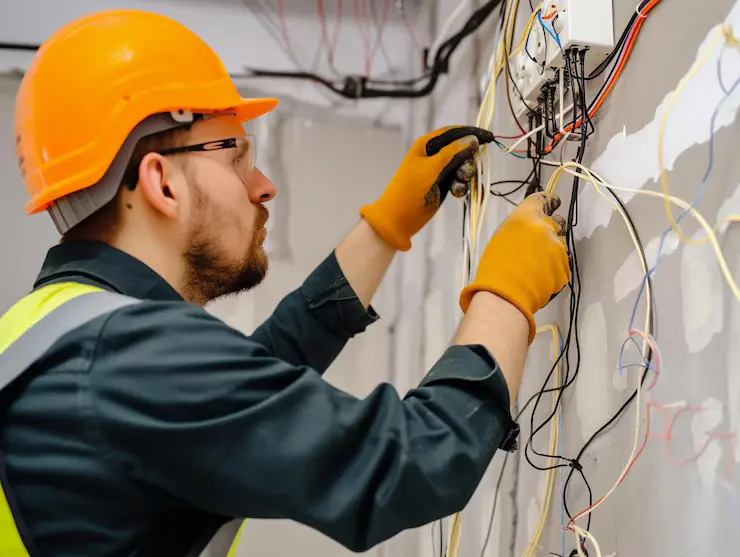
Electrical repairs and fault finding — tracking down the actual cause of an issue rather than just resetting whatever’s tripped. Faulty wiring, dead sockets, switches that have stopped working, loose connections, and circuits that trip under load are the most common calls we get. See Electrical Fault Finding for our diagnostic process.
Rewiring, full and partial — signs a home may need it include frequent tripping, old fabric-insulated cable, cracked or yellowed accessories, missing earthing, or simply an installation that’s aged past what current safety standards expect.
Consumer unit and fuse board replacement — older boards frequently lack RCD protection altogether, or use a plastic enclosure that’s no longer considered acceptable practice. See Consumer Unit Installation for the full detail on what a modern board includes and when replacement is worth it.
Areas We Cover Across London
Sockets, switches and lighting — additional sockets where a home’s demand has outgrown its original wiring, USB and weatherproof outdoor sockets, LED upgrades, downlights, pendant fittings, and outdoor and garden lighting.
Kitchen and bathroom electrical work — these two rooms carry the heaviest and highest-risk electrical load in most homes. Cooker circuits, extractor fans, and bathroom lighting/shaver sockets all need to be done to the specific zoning rules that apply near water.
Home renovations and extensions — electrical planning done at the design stage, not bolted on afterwards. See Electrical Repairs and Installation for the full installation service range.
Residential EICR and electrical safety certificates — a formal inspection and report on the condition of a home’s fixed wiring. See our dedicated Residential EICR page.
Fixed wire testing — the technical process behind an EICR, covering circuits, distribution boards and protective devices; see Fixed Wire Testing.
PAT testing for rental properties — checking that appliances supplied to tenants remain safe to use; see our PAT Testing page.
Smart home and lighting control installation — smart switches, dimmers, app-controlled lighting circuits, and integration with existing wiring rather than a bolt-on gadget approach. Retrofitting smart lighting into an older property depends on whether a neutral wire is already present at each switch position worth checking before buying equipment rather than after.
Our Complete Landlord Safety Certificate Services in London
Gas Safety Certificate
Certified EICR inspections to ensure your property’s wiring is safe, compliant, and legally approved.
Fire Safety Services
Complete fire safety inspections, alarms, and compliance solutions to protect your property and occupants.
Energy Performance Certificate (EPC)
Fast and accurate EPC assessments to rate your property’s energy efficiency and meet legal requirements.
Asbestos Survey
Professional asbestos surveys to identify risks and ensure full compliance with UK safety regulations.
Inventory Services
Detailed property inventory reports with photos to protect landlords, agents, and tenants.
Legionella Services
Legionella risk assessments and water testing to maintain safe and compliant water systems.
Should I Rewire or Just Repair?
This is one of the most common questions we get asked, and the honest answer is: it depends on what’s actually wrong, not the age of the property alone.
A repair is usually enough when:
- The fault is isolated to one circuit or a small number of accessories
- The rest of the installation tests soundly during inspection
- The consumer unit already has RCD protection and reasonable capacity
- There’s no widespread sign of degraded insulation elsewhere in the property
A full or partial rewire is usually the better call when:
- The property still has fabric-insulated or otherwise clearly outdated cabling
- Multiple circuits show signs of ageing or inconsistent past repairs
- There’s no earthing, or earthing that doesn’t meet current standards, in significant parts of the home
- You’re doing a substantial renovation anyway, where opening up walls makes rewiring far less disruptive than doing it later
- An EICR has come back with multiple C1 or C2 observations across different circuits
If you are unsure which category your home falls into, a Residential EICR is the most reliable way to find out before committing to either option.
For Homeowners: If you own the property you live in, most of what brings people to us falls into one of two camps: something’s gone wrong and needs fixing, or you’re planning a change and want it done properly the first time. We assess the actual condition of your electrics rather than defaulting to the most expensive recommendation.
For Tenants: If something electrical isn’t working in a property you rent, the responsibility for fixing it usually sits with your landlord or letting agent — but we’re regularly instructed by both to attend directly. Where we’re carrying out the repair, we provide clear findings and documentation your landlord or agent can use to confirm the work’s been done properly.
For Residential Landlords: Since 2020, most private landlords in England have had a legal duty to have their rental property’s electrical installation inspected and tested at intervals of no more than five years, under the Electrical Safety Standards in the Private Rented Sector (England) Regulations 2020. We carry out these inspections, issue the paperwork, and complete whatever remedial work the report identifies see our Landlord Electrical Safety Certificate page for the compliance side specifically. If you manage more than one property, we can coordinate inspection dates across a small portfolio.
Areas We Cover Across London and the M25
Liviosiv provides electrician services right across Greater London — here’s the detail by region.
Central London: Westminster, the City of London, Holborn, Covent Garden, Soho, Mayfair, Marylebone, Fitzrovia, Bloomsbury, St James’s, Pimlico, Victoria, Belgravia, the South Bank, Knightsbridge, Chelsea, Kensington, Paddington, Bayswater and Notting Hill — spanning W1, WC1, WC2, SW1, SW3, SW7, SE1 and W2.
North London: from Highgate and Muswell Hill through Crouch End, Finsbury Park and Archway, out to Hampstead, Golders Green, the Finchleys, Mill Hill, Totteridge, Barnet, Enfield, Palmers Green, Southgate, Edmonton, Wood Green and Islington — covering N and NW postcodes including N1 through N22, NW3, NW7 and NW11, plus EN1, EN2, EN4 and EN5.
North West London: Cricklewood, Kilburn, Willesden, Harlesden, Wembley, Kingsbury, Harrow (and North, South and Weald), Pinner, Ruislip, Stanmore, Edgware, Colindale, Hendon and Swiss Cottage — across NW2, NW4, NW6, NW9, NW10, and the HA0 to HA8 range.
West London: Acton, Chiswick, Ealing, Hanwell, Hammersmith, Shepherd’s Bush, White City, Holland Park, Southall, Brentford, Isleworth, Hounslow, Feltham, Hayes, Uxbridge and West Drayton — W3 through W14, plus UB1, UB2, UB3, UB7, UB8, and TW3, TW7, TW8, TW13 and TW14.
South West London: Putney, Wandsworth, Clapham Junction, Battersea, Balham, Tooting, Wimbledon, Morden, Mitcham, Streatham, Richmond, Twickenham, Teddington, Hampton, Kingston, Surbiton and New Malden — SW11, SW12, SW15 through SW20, plus TW1, TW2, TW9 to TW12, and KT1 to KT6.
South London: Brixton, Clapham, Stockwell, Vauxhall, Kennington, Elephant and Castle, Camberwell, Peckham, Dulwich, Herne Hill, Crystal Palace, the Norwoods, Thornton Heath and Croydon — SW2, SW4, SW8, SW9, SE1, SE5, SE11, SE15, SE19, SE21, SE22, SE24, SE25, SE27, and CR0, CR5, CR7, CR8.
South East London: Deptford, New Cross, Brockley, Lewisham, Catford, Blackheath, Greenwich, Eltham, Woolwich, Plumstead, Bexleyheath, Sidcup, Chislehurst, Bromley, Beckenham, Orpington and Penge — SE2, SE3, SE4, SE6 to SE10, SE13, SE14, SE18 and SE20, plus DA6, DA7, DA14 to DA16, and BR1 to BR7.
East London: Shoreditch, Hoxton, Bethnal Green, Whitechapel, Stepney, Bow, Poplar, Canary Wharf, Stratford, Forest Gate, Plaistow, East Ham, Barking, Dagenham, Ilford, Romford, Hornchurch, Upminster, Leyton, Leytonstone, Walthamstow, Chingford and Woodford Green — E1 through E17, IG1, IG3, IG8, IG11, and RM1 to RM14.
Book a Residential Electrician in London
Whether it is a fault that needs fixing today, a consumer unit that’s overdue an upgrade, or a full residential EICR for a rental property, Liviosiv is ready to help.
What Happens After a Failed EICR
A failed EICR isn’t the end of the process — it’s the start of a fairly structured one:
Certification issued after remedial work — a Minor Electrical Installation Works Certificate for smaller repairs, or a full Electrical Installation Certificate for more extensive work.
Understanding the codes — observations are graded by risk. C1 means immediate danger, C2 means a potentially dangerous defect, FI means further investigation is needed, and C3 is a recommendation rather than a required fix.
We move quickly on remedial work — where issues are identified, we quote promptly and complete remedial repairs, with retest certification issued as soon as the work is finished. See our EICR Remedial Work page and our EICR FAQs for common questions. For a broader breakdown of costs, see our blog post: How Much Does an EICR Certificate Cost in London? Full 2026 Price Guide.
Common Warning Signs in London Homes
- Lights that flicker or dim when a large appliance switches on — often an overloaded circuit or a loose connection somewhere upstream.
- A fuse board that trips repeatedly — almost always a genuine fault rather than the board itself being “faulty” in the abstract.
- Warm or discoloured sockets and switches — a sign of a poor connection generating heat.
- Buzzing or crackling from the consumer unit — worth treating as urgent.
- An old board with rewirable fuses or no RCD protection — not necessarily an emergency on its own, but a strong candidate for an upgrade before it becomes one.
Our Process for Residential Electrical Work
- Tell us what’s going on — describe the problem or send a few photos.
- We confirm access and timing — including same-day options where availability allows.
- A qualified electrician attends and inspects the affected circuit or installation.
- We explain what’s actually wrong, in plain language, before any work beyond diagnosis begins.
- The repair or installation is carried out using appropriate materials and methods.
- Everything is tested before we leave, and relevant certification is issued where the work requires it.
Why Homeowners and Landlords Choose Liviosiv
- NICEIC and NAPIT accredited residential electricians
- Genuine experience across period properties, conversions, HMOs and new-builds
- Clear explanations, not unnecessary upselling
- Residential EICR pricing published upfront, from £85
- Fully insured service
- Support for owner-occupiers, tenants and landlords under one provider
Frequently Asked Questions (FAQ)
Do you work on homes as well as rental properties?
Yes — owner-occupied homes, tenanted properties and everything in between.
How is a residential electrician different from a general electrician?
The core qualifications are the same, but working on homes day-to-day means more experience with domestic-scale consumer units, room-specific rules like bathroom zoning, and the practical side of working in an occupied, lived-in space.
Do I need an electrician or can I fix it myself?
Anything beyond changing a light bulb or resetting a tripped switch should go to a qualified electrician — DIY electrical work can be genuinely dangerous and may also affect your home insurance if something goes wrong later.
How much does it cost to hire a residential electrician in London?
For a Residential EICR, pricing starts from £85 for a studio flat see our Residential EICR page for the full table. For general repairs and installation work, cost depends on the fault, the time needed, and materials.
Do older London properties need rewiring more often?
Not automatically, but period properties are more likely to have ageing cable insulation, outdated consumer units, or inconsistent past repairs.
Can you attend the same day for an urgent problem?
Often, yes, depending on location and engineer availability.
Do landlords legally need an electrical safety check?
Yes. Most private rental properties in England require a valid EICR, renewed at intervals of no more than five years under the 2020 Regulations.
Do you install additional sockets in older homes?
Yes, subject to checking if the existing circuit has the capacity, or adding a new circuit where it doesn’t.
How do I know if I need a full rewire or just a repair?
It depends on what an inspection finds see the “Should I Rewire or Just Repair?” section above for the full breakdown.
Can you install smart lighting or smart switches in an older property?
In most cases, yes though it depends on whether a neutral wire is present at the switch position, which we check before recommending equipment.
Accrediations






 contact@liviosiv.co