
PAT Testing London | Certified Portable Appliance Testing from £75
Searching for a PAT test near me in London? Liviosiv is a trusted, accredited PAT testing company offering fast, fully certified portable appliance testing for landlords, businesses and industrial sites across the capital. Every visit includes a full inspection, electrical testing, compliant labelling and a same-day PAT testing certificate — with transparent pricing and no hidden fees.
What Is PAT Testing?
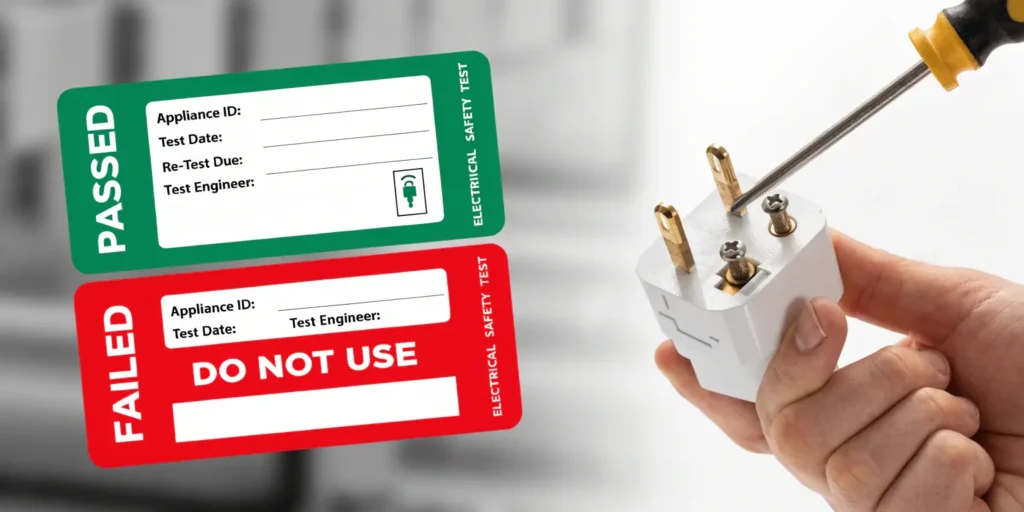
PAT testing (Portable Appliance Testing) is the inspection and electrical testing of appliances that plug into a wall socket, carried out to confirm they’re safe to use. In simple terms, the PAT testing meaning — sometimes searched as “pat test meaning” — is a formal safety check that combines a visual inspection of the plug, cable and casing with a series of electrical tests, after which every appliance is labelled pass or fail.
The Health and Safety Executive (HSE) defines it as the term for electrical testing and inspection of appliances and equipment to ensure their safety — most electrical safety defects can be found visually, but some can only be found through testing. That’s the official PAT testing definition, and it’s the standard way UK businesses and landlords demonstrate their electrical equipment is being properly maintained. So, in short — what are PAT tests? They’re the combined visual-and-electrical safety check described above, carried out on any appliance with a plug (and some fixed appliances too).
We Provide PAT Testing For
Landlords
Homeowners
Letting Agents
Estate Agents
Property Managers
Businesses
What Does PAT Stand For?
PAT stands for Portable Appliance Testing. It’s one of the most commonly searched questions in this space — people ask “what does PAT testing stand for,” “what does PAT test stand for” and “what does PAT testing mean” almost interchangeably, and the answer is the same in every case. Under the IET’s 5th Edition Code of Practice it’s more formally referred to as “in-service inspection and testing of electrical equipment,” but “PAT tested” and “PAT testing” remain the terms almost everyone uses and searches for.
What is Included in a Full PAT Test?
Every PAT test we carry out includes four stages, each recorded against the appliance so you have a full audit trail.
Visual Inspection: We check the plug, cable and appliance casing for visible damage — frayed or trapped cables, cracked plug tops, signs of overheating or scorching, and incorrect or loose fuses. Most electrical safety defects are actually caught at this stage, which is why it’s never skipped, even on appliances that go on to pass electrical testing.
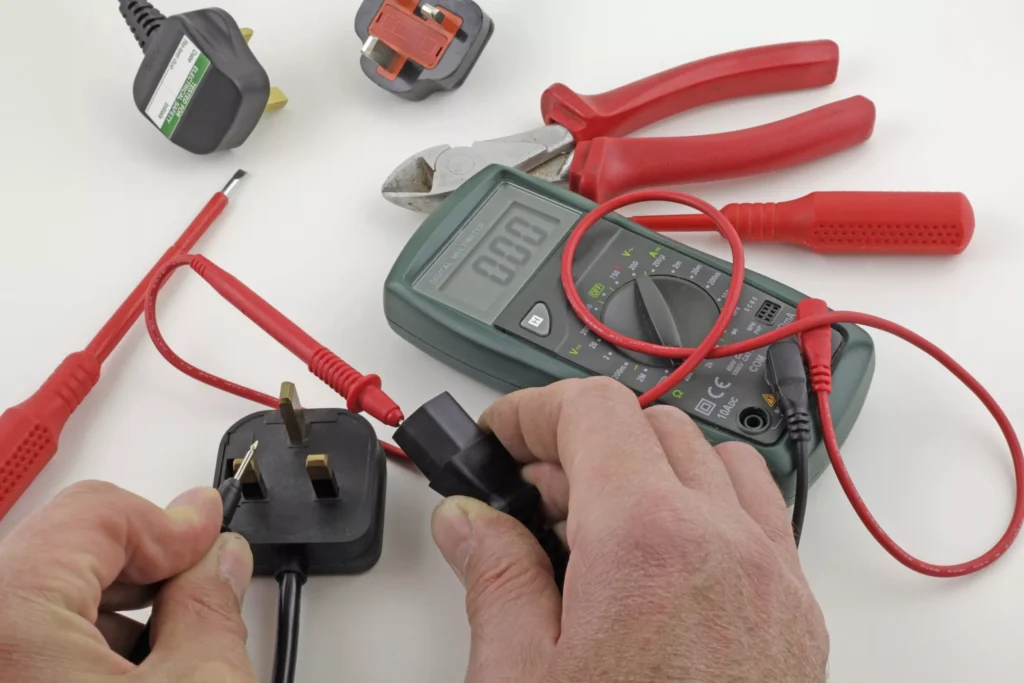
Electrical Testing: Suitable appliances then go through calibrated electrical tests, including an earth continuity test (confirming Class 1 appliances are properly earthed) and an insulation resistance test (confirming the appliance is safely insulated). Class 2 appliances are tested according to their double-insulated construction rather than earthing.
Pass/Fail Labelling: Every appliance is labelled the same day with tamper-evident PAT testing stickers, showing whether it passed or failed, the date it was tested, and when it’s due for retest. Anything that fails is clearly flagged and should be taken out of use until it’s repaired or replaced.
Certificate & Appliance Register: You will receive a full appliance register listing every item tested and its result, plus a PAT testing certificate summarising the inspection for your compliance records — provided electronically, with a hard copy available on request.
Geographical Breakdown of London’s Districts
The PAT Testing Equipment We Use
All our engineers work with professional, regularly calibrated PAT testing equipment — not budget testers picked up for a one-off job. Our PAT test equipment carries out earth continuity, insulation resistance and (where relevant) earth leakage tests to the accuracy required by the IET Code of Practice, and every tester is calibrated on a set schedule so results stand up to scrutiny from insurers, auditors or letting agents. Whether you’re comparing us to other PAT testing companies or simply asking what a PAT testing tester actually does, the short answer is: it’s the calibrated instrument that turns a visual check into a fully documented electrical safety test.
Is PAT Testing a Legal Requirement in London?
Is PAT testing a legal requirement? Not directly — there’s no single law that says “you must PAT test every appliance every year.” What the law does require is that employers and landlords keep electrical equipment in a safe condition, and PAT testing is the recognised, practical way of proving that duty has been met. This is also the answer to “what is the legal requirement for PAT testing” and “is PAT testing a legal requirement for landlords” — the requirement is to keep equipment safe, and PAT testing is how you evidence it.
The Law: Electricity at Work Regulations 1989 & Health and Safety at Work Act 1974
The relevant PAT testing regulations — often searched as “PAT testing regulations UK” or “UK PAT testing requirements” — include the Electricity at Work Regulations 1989, the Health and Safety at Work Act 1974, and the Provision and Use of Work Equipment Regulations 1998 (PUWER). Together, these place a duty on employers, landlords and business owners to maintain electrical equipment so it doesn’t put people at risk. At Liviosiv, we also work in line with the Building Safety Act 2022 across all our landlord safety certification services. The HSE’s own guidance (HSE PAT testing advice) doesn’t dictate a fixed testing schedule, but a documented PAT testing programme is the standard evidence used to show compliance — these are the core PAT testing requirements in practice, even without a single statutory interval. Testing itself should follow the IET Code of Practice for in-service inspection and testing.
What Happens If You Don’t Test?
Without documented testing, you have no formal proof that your electrical equipment has been maintained safely. If an appliance fault causes an accident or fire, this can affect an insurance claim and, in serious cases, lead to prosecution under health and safety law. For landlords specifically, providing untested appliances to tenants is a common area of dispute and liability if something goes wrong.
How Often Should PAT Testing Be Done?
There’s no single legal interval — PAT testing frequency depends on the type of equipment, how often it’s used, and the environment it’s used in. This section covers how often is PAT testing required, how long does a PAT test last, and the recommended schedule by sector, based on widely used industry guidance from the IET Code of Practice.
In general, once an appliance is tested and labelled, that result is considered valid until its marked retest date — so how long does PAT testing last really depends on the appliance class and environment, which is exactly what the table below breaks down.
Recommended Testing Frequency by Sector
Offices, Shops & Hotels: Class 1 IT and stationary equipment: every 2 years. Movable equipment such as extension leads: every 2 years. Handheld equipment: at least every 12 months.
Schools & Educational Buildings: Class 1 equipment: every 12 months as a minimum. Class 2 equipment: up to every 48 months, reflecting the lower risk of double-insulated items.
Construction Sites (110V Equipment): All 110V equipment used on-site should be inspected and tested every 3 months, given the higher risk of damage in a construction environment.
Public-Use & High-Risk Equipment: Movable, portable or handheld Class 1 equipment used by the public should be tested every 6 months as a minimum, with IT and Class 2 equipment tested every 12 months.
PAT Testing Classes Explained (Class 1, 2 & 3)
- Class 1 appliances rely on an earth connection for protection — kettles, toasters, fridges and photocopiers are typical examples.
- Class 2 appliances are double-insulated and don’t depend on earthing — think TVs, routers and many modern floor lamps.
- Class 3 items run on extra-low voltage and carry the lowest risk — cameras and
- some laptops fall into this category.
What Type of Appliances We Test
What needs PAT testing? In practice, we test every category of electrical appliance covered under the IET Code of Practice, across offices, homes, factories and industrial sites. If it has a plug — or is hardwired into a circuit — we can test it, including PAT testing fixed appliances and PAT testing new equipment before it’s put into service for the first time (a “first-use” check that’s good practice even on brand-new purchases).
Earthed Appliances (Class 1): Class 1 appliances have basic insulation and rely on a properly connected earth wire as their main protection against electric shock if a fault occurs. Common examples include kettles, toasters, microwaves, washing machines, fridges and photocopiers. Testing focuses on earth continuity — confirming the earth path is intact and offers low enough resistance to work safely.
Double Insulated Appliances (Class 2): Class 2 appliances don’t have — or rely on — an earth connection. Instead, they’re built with double or reinforced insulation, so there’s no exposed metal that could become live if a fault develops. TVs, routers, many power tools, chargers and modern floor lamps fall into this category. Testing here focuses on insulation resistance rather than earth continuity.
Low Voltage Appliances (Class 3): Class 3 equipment runs on extra-low voltage (typically under 50V AC), usually via a separate transformer or battery, which significantly reduces the risk of serious electric shock. Cameras, some laptops, and certain telecoms equipment are common examples. These carry the lowest risk profile of the three classes but are still checked as part of a full inventory.
Fixed, Portable, IT & Industrial Equipment: Beyond the three electrical classes, appliances are also grouped by how they are used on-site:
- Fixed appliances — hand dryers, storage heaters, built-in cookers, wall-mounted units connected via a spur or fused connection unit rather than a standard plug. (Note: this is different from your building’s fixed wiring itself — see our Fixed Wire Testing and Fuse Box Installation services for that.)
- Stationary appliances — items too heavy or awkward to move regularly, such as fridges, vending machines and large photocopiers.
- IT & office equipment — PCs, monitors, laptops, printers and their power leads, which are tested separately from the devices they power.
- Portable & handheld appliances — kettles, hairdryers, power drills, and anything designed to be picked up and moved during use.
- Industrial & factory equipment — 110V site tools, workshop machinery, welding equipment and heavy-duty extension leads used in manufacturing and warehouse environments.
- Cables, extension leads & chargers — among the most frequently failed items, since they’re moved, coiled and trodden on more than almost anything else on a typical site.
Property / Sector | Why PAT Testing Is Needed | Common Appliances Tested |
Landlords & Letting Agents | Demonstrates that supplied electrical appliances in furnished rentals, HMOs and managed properties have been maintained safely. Often requested before a new tenancy begins. | Kettles, microwaves, washing machines, fridges, lamps, vacuum cleaners |
Offices & Co-Working Spaces | Helps meet workplace health and safety responsibilities while reducing the risk of equipment failure and downtime. | Computers, monitors, printers, kettles, extension leads, chargers |
Restaurants, Cafés & Hospitality | Commercial kitchens place heavy demand on electrical equipment, making regular testing essential for safety and insurance compliance. | Coffee machines, microwaves, toasters, kettles, mixers, refrigerators |
Schools & Colleges | Supports electrical safety across educational facilities where a wide range of portable appliances are used daily. | Computers, projectors, printers, laboratory equipment, kitchen appliances |
Healthcare & NHS Settings | Frequent testing helps maintain electrical safety in environments where equipment reliability is critical. | Medical devices, computers, monitors, kettles, portable electrical equipment |
Industrial Sites & Factories | Heavy use and demanding working conditions increase wear and tear, making regular PAT testing essential. | Power tools, workshop equipment, extension leads, battery chargers, portable machinery |
Military & Defence Facilities | Supports strict compliance, documentation and safety standards within secure sites and defence environments. | Office equipment, workshop tools, portable electrical appliances, testing equipment |
Construction Sites | Portable tools operate in harsh environments and often require testing every 3 months to maintain compliance and safety. | 110V power tools, extension leads, transformers, site lighting, battery chargers |
Download Our Free PAT Testing Compliance Checklist
Not ready to book yet? Download our free one-page PAT Testing Compliance Checklist — a simple guide to what needs testing, how often, and what your certificate should include. No obligation, just useful.Our Structured PAT Testing Process
We follow a clear and organised approach to minimise disruption.
Pre-visit planning – We confirm the number of items and access arrangements.
Documentation – You receive a digital report and appliance register.
Future planning – We advise on suitable re-test intervals based on risk.
On-site testing – Each item is inspected, tested, and labelled.
Fail management – Unsafe items are clearly identified and removed from use.You receive your report and certificate
Who can do PAT testing?
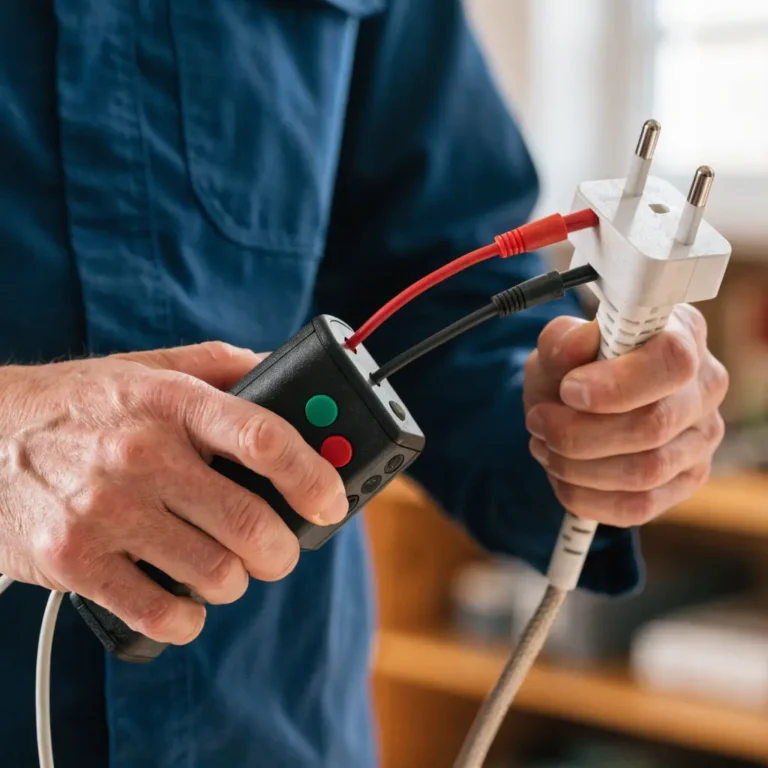
Legally, a “competent person” can carry it out — but in practice, that means someone trained and experienced in electrical testing, not just anyone with a tester. Every test we carry out is done by a qualified, insured, DBS-checked electrician and PAT testing specialist — the same team behind our residential and commercial electrician services, with more than six years’ experience serving landlords, estate agents and property managers across London.
Our Accreditations
Liviosiv’s engineers hold recognised industry accreditations across our full range of compliance services, including NAPIT, NICEIC, City & Guilds, BAFE, FDIS, IFSM, TrustMark, Gas Safe Register, and NEBOSH. Our electrical and PAT testing work specifically follows City & Guilds 2377 standards and the IET Code of Practice for In-Service Inspection and Testing of Electrical Equipment. So if you’re asking “who can PAT test” my appliances with confidence, the answer is: an accredited engineer working to this standard, fully insured and DBS-checked — which is exactly what every Liviosiv visit includes.
What to Expect On-Site
Our engineers work efficiently and with minimal disruption most items take just a couple of minutes each once access is arranged. We’ll flag any failed appliances immediately, offer free minor repairs where appropriate (such as replacing a fuse or plug), and leave you with clear pass/fail labelling on every item tested, plus a digital report delivered within 24–48 hours. For faults beyond a minor repair, our electrical repairs and installation team can help.
Common Issues Found During PAT Testing
Most electrical safety defects are things you’d never spot just by using the appliance day to day which is exactly why regular testing matters. The issues we come across most often include:
- Damaged or worn cables — frayed, cut, trapped under furniture, or with the outer sheath perished from age.
- Cracked or overheated plug tops — visible scorch marks, loose pins, or casing damage from being dropped or knocked.
- Incorrect or missing fuses — the wrong fuse rating fitted for the appliance, which can fail to protect against a fault.
- Loose internal connections — wiring inside the plug that’s worked loose over time, common on appliances that get unplugged and re-plugged frequently.
- Failed earth continuity — on Class 1 appliances, a broken or high-resistance earth path that would no longer protect against electric shock.
- Insulation breakdown — deterioration inside the appliance that isn’t visible externally but shows up in electrical testing.
- Exposed live parts — cracked casing on an appliance that exposes internal wiring or components.
Left unaddressed, these are common causes of electric shock and electrical fires — which is the core reason testing combines both a visual check and electrical testing rather than relying on either alone. Where a fault isn’t a simple fix, our electrical fault finding service can diagnose the underlying issue.
Ongoing Maintenance And Retesting
PAT testing is not a one-off box to tick it is part of an ongoing maintenance cycle. We will record the retest date for every appliance and can set up automatic retest reminders so you’re never caught out by an appliance falling out of date, whether you’re managing a single office or a portfolio of rental properties across multiple sites.
Your PAT Testing Certificate
What is Included
Your certificate and appliance register list every item tested, its class, its result, the date tested and the date it’s next due — giving you a single document you can hand to an insurer, letting agent, council or auditor as proof of compliance. Liviosiv delivers all reports digitally within 24–48 hours, ready for tenants, agents or councils.
PAT Testing vs EICR: What is the Difference?
They’re often confused, but they cover different things. PAT testing checks portable, plug-in appliances — kettles, laptops, extension leads. An EICR (Electrical Installation Condition Report) inspects your property’s fixed wiring — the sockets, consumer unit and cabling built into the walls. Most landlords and businesses need both: PAT testing for the appliances you supply, and an EICR (required for rental properties at least every 5 years) for the fixed installation itself. Booking them together in one visit is usually the most cost-effective option — Liviosiv’s compliance bundles are built around exactly this kind of combined visit. If you’re weighing up costs, our full 2026 EICR price guide breaks down what to expect, and our EICR FAQ page covers the most common questions.
Areas We Cover in London
Searching for PAT testing near me? Liviosiv provides London PAT testing right across the capital and into the surrounding M25 area, with engineers based to minimise travel time and keep costs down.
Central London Areas We Cover
We provide our services throughout Central London, covering Westminster (SW1), the City of London (EC1–EC4), Holborn (WC1), Covent Garden (WC2), Soho (W1), Mayfair (W1K, W1J), Marylebone (W1U, NW1), Fitzrovia (W1T), Bloomsbury (WC1), St James’s (SW1), Pimlico (SW1V), South Bank (SE1), Victoria (SW1), Belgravia (SW1X), Knightsbridge (SW1X), Chelsea (SW3, SW10), Kensington (W8, SW7), Paddington (W2), Bayswater (W2), and Notting Hill (W11). See also our dedicated pages for Bloomsbury, Holborn & Fitzrovia, Belgravia, City of London & Mayfair, Covent Garden, St James’s & Soho, and Victoria, South Bank & Knightsbridge.]
North London Areas We Cover
Our team serves properties across North London, including Highgate (N6), Muswell Hill (N10), Crouch End (N8), Finsbury Park (N4), Archway (N19), Hampstead (NW3), Golders Green (NW11), Finchley East (N2), Finchley Central (N3), North Finchley (N12), Mill Hill (NW7), Totteridge (N20), Whetstone (N20), Barnet (EN4, EN5), Enfield Town (EN2), Palmers Green (N13), Winchmore Hill (N21), Southgate (N14), Edmonton (N9, N18), Bounds Green (N11), Wood Green (N22), Alexandra Palace (N22), Holloway (N7), and Islington (N1).
North West London Areas We Cover
We also cover North West London, including Cricklewood (NW2), Kilburn (NW6), Willesden (NW10), Neasden (NW10), Harlesden (NW10), Wembley (HA0, HA9), Alperton (HA0), Kingsbury (NW9), Queensbury (HA3, HA7), Kenton (HA3), Harrow on the Hill (HA1), South Harrow (HA2), North Harrow (HA2), Harrow Weald (HA3), Pinner (HA5), Ruislip (HA4), Stanmore (HA7), Edgware (HA8), Colindale (NW9), Hendon (NW4), Brent Cross (NW4), and Swiss Cottage (NW3).
West London Areas We Cover
Across West London, we provide services in Acton (W3), Chiswick (W4), Ealing (W5), West Ealing (W13), Northfields (W13), Hanwell (W7), Hammersmith (W6), Shepherd’s Bush (W12), White City (W12), Holland Park (W11), Kensington (W8), Southall (UB1, UB2), Brentford (TW8), Isleworth (TW7), Hounslow (TW3, TW4), Osterley (TW7), Feltham (TW13, TW14), Hayes (UB3, UB4), Harlington (UB3), Uxbridge (UB8), Ruislip (HA4), Yiewsley (UB7), and West Drayton (UB7).
South West London Areas We Cover
Our South West London coverage includes Putney (SW15), Wandsworth (SW18), Clapham Junction (SW11), Battersea (SW11, SW8), Balham (SW12), Tooting (SW17), Earlsfield (SW18), Southfields (SW18), Wimbledon (SW19), Raynes Park (SW20), Morden (SM4), Colliers Wood (SW19), Mitcham (CR4), Streatham (SW16), Norbury (SW16), Richmond (TW9, TW10), Twickenham (TW1, TW2), Teddington (TW11), Hampton (TW12), Kingston upon Thames (KT1, KT2), Surbiton (KT5, KT6), and New Malden (KT3).
South London Areas We Cover
We cover all major South London locations, including Brixton (SW2, SW9), Clapham (SW4), Stockwell (SW8, SW9), Vauxhall (SE11), Kennington (SE11), Elephant & Castle (SE1, SE17), Camberwell (SE5), Peckham (SE15), Dulwich (SE21, SE22), Herne Hill (SE24), Crystal Palace (SE19), West Norwood (SE27), Upper Norwood (SE19), South Norwood (SE25), Thornton Heath (CR7), Croydon (CR0, CR2), Purley (CR8), Coulsdon (CR5), Addiscombe (CR0), Shirley (CR0), and Selhurst (SE25).
South East London Areas We Cover
Our engineers regularly attend properties throughout South East London, including Deptford (SE8), New Cross (SE14), Brockley (SE4), Lewisham (SE13), Catford (SE6), Hither Green (SE13), Blackheath (SE3), Greenwich (SE10), Eltham (SE9), Woolwich (SE18), Plumstead (SE18), Abbey Wood (SE2), Thamesmead (SE28), Bexleyheath (DA6, DA7), Welling (DA16), Sidcup (DA14, DA15), Chislehurst (BR7), Bromley (BR1, BR2), Beckenham (BR3), Orpington (BR5, BR6), Penge (SE20), Anerley (SE20), and Grove Park (SE12).
East London Areas We Cover
We provide services across East London, including Shoreditch (E1, EC2), Hoxton (N1), Bethnal Green (E2), Whitechapel (E1), Stepney (E1), Poplar (E14), Bow (E3), Canary Wharf (E14), Stratford (E15, E20), Forest Gate (E7), Plaistow (E13), East Ham (E6), West Ham (E15), Canning Town (E16), Beckton (E6), Barking (IG11), Dagenham (RM8, RM10), Ilford (IG1), Seven Kings (IG3), Goodmayes (IG3), Chadwell Heath (RM6), Romford (RM1, RM2, RM3), Gidea Park (RM2), Hornchurch (RM11, RM12), Upminster (RM14), Wanstead (E11), Leyton (E10), Leytonstone (E11), Walthamstow (E17), Chingford (E4), and Woodford Green (IG8).
Surrounding Areas Near the M25 We Cover
We also provide services in selected towns surrounding Greater London and close to the M25, including Watford (WD17–WD25), Bushey (WD23), Borehamwood (WD6), Elstree (WD6), Potters Bar (EN6), Cheshunt (EN7, EN8), Waltham Abbey (EN9), Epping (CM16), Loughton (IG10), Theydon Bois (CM16), Chigwell (IG7), Buckhurst Hill (IG9), Brentwood (CM13, CM14, CM15), Upminster Bridge (RM14), Dartford (DA1, DA2), Swanley (BR8), Orpington (BR6), Epsom (KT17, KT18, KT19), Ewell (KT17), Leatherhead (KT22), Ashford, Middlesex (TW15), Staines-upon-Thames (TW18), Sunbury-on-Thames (TW16), Shepperton (TW17), Rickmansworth (WD3), and Chorleywood (WD3).
Don’t see your area listed? Get in touch — Liviosiv covers the wider Greater London area and beyond.
Book Your PAT Testing in London
Get a fast, transparent quote and a booking that fits your schedule — with certified engineers, clear pricing and same-day options available.
Frequently Asked Questions (FAQ)
Do I Legally Need PAT Testing for My Rental Property in London?
There’s no law requiring PAT testing at a fixed interval, but landlords do have a legal duty under the Electricity at Work Regulations 1989 to keep appliances they supply in a safe condition. PAT testing is the standard, recognised way to demonstrate that duty has been met, and many letting agents and insurers now expect to see up-to-date records before a tenancy starts.
How Much Does PAT Testing Cost for a Small Office in London?
For a small office with 10–20 appliances, expect to pay around £89 based on our tiered pricing (up to 10 items is £75, rising to £89 for 10–20 items and £115 for 20–40 items). Larger batches bring the per-item cost down, so it’s usually more cost-effective to test everything in one visit rather than spreading it out.
What Happens If an Appliance Fails a PAT Test?
A failed appliance is labelled clearly and should be removed from use immediately. Depending on the fault, it may be repairable on the spot — our engineers carry out free minor repairs such as fuse and plug replacements — or it may need to be replaced entirely if the fault is more serious.
How Long Does PAT Testing Take?
A qualified engineer can typically test around 30–40 items per hour, so a small office of 20 appliances usually takes under an hour. The main factor that slows testing down is equipment not being switched off in advance, so it helps to have everything powered down before we arrive.
Can You Do PAT Testing Out of Hours or on Weekends?
Yes — we offer evening and weekend appointments at no extra disruption to your working day, ideal for busy offices, retail units and hospitality venues that can’t afford daytime downtime.
Do You Provide Same-Day or Next-Day PAT Testing in London?
Yes, subject to availability. If you need testing urgently — for example, ahead of a new tenancy or an upcoming audit — call +44 204 617 8121 and we’ll do our best to fit you in same-day or next-day.
What Does PAT Stand For?
PAT stands for Portable Appliance Testing — the inspection and electrical testing of plug-in appliances to confirm they’re safe to use.
How Often Are PAT Tests Required?
It depends on the equipment and environment: roughly every 12 months for handheld appliances in offices, up to 48 months for low-risk Class 2 equipment in schools, and every 3 months for 110V construction equipment. See the full frequency table above for a sector-by-sector breakdown.
Who Can Do PAT Testing?
A “competent person” — someone with the right training, knowledge and calibrated equipment to carry out the tests correctly — can perform PAT testing. Most businesses use an accredited, insured PAT testing company rather than relying on in-house staff, particularly for larger sites or higher-risk environments. Liviosiv’s engineers are NAPIT, NICEIC and City & Guilds qualified, and fully DBS-checked.
What Needs PAT Testing?
Broadly, anything with a plug: IT equipment, kitchen appliances, power tools, extension leads and chargers, plus certain fixed appliances connected via a spur rather than a standard plug. If you’re unsure whether a specific item needs testing, our engineers can confirm this as part of your visit.
Accreditations






 contact@liviosiv.co